


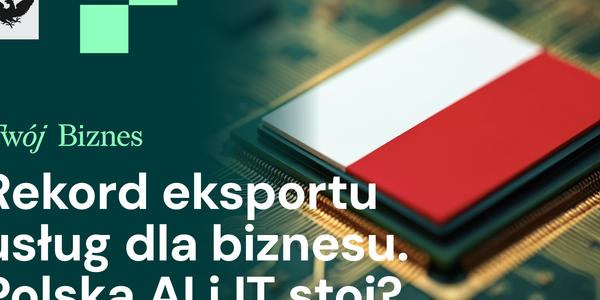
Poland's Business Services Exports Hit Record High Amid Global Tensions and EU Sanctions
Translated from Polish, summarized and contextualized by DistantNews.
TLDR
- Poland's business services exports reached a record $58.3 billion in 2025, an 11% increase from the previous year, driven by IT services and a shift towards high-value offerings.
- Geopolitical tensions in the Persian Gulf, particularly between the US and Iran, have caused oil prices to surge and investor uncertainty to rise.
- The EU approved its 20th sanctions package against Russia, targeting services for Russian gas carriers and LNG terminals, though some member states call for more decisive action on the energy crisis.
Poland's economy is demonstrating remarkable resilience and growth, with a record-breaking export of business services reaching $58.3 billion in 2025. This achievement, a significant 11% jump from the previous year, underscores the nation's evolving economic landscape. The National Bank of Poland's data highlights the burgeoning role of IT services, now accounting for nearly 38% of total exports. Experts attribute this surge not only to improving economic conditions but also to a strategic shift in business models, with companies increasingly focusing on high-value services, including artificial intelligence implementations. Poland is shedding its image as a low-cost location and establishing itself as a competence hub for advanced business processes.
Meanwhile, global instability casts a shadow. The geopolitical situation in the Persian Gulf remains tense, with weakened US-Iran relations heightening the risk of conflict escalation. Reports of air defense system activations in Tehran sent Brent crude prices soaring to $107 per barrel, while gold prices fell, signaling investor apprehension and a lack of confidence in a swift resolution.
In response to ongoing global conflicts, the European Union has adopted its 20th sanctions package against Russia. This latest measure includes prohibitions on providing services to Russian gas carriers and icebreakers, alongside restrictions on companies linked to Russian capital accessing LNG terminals. This move signifies a continued effort to curtail Russia's influence on the European energy market. However, the effectiveness and scope of these sanctions are not without debate, as some EU nations advocate for more robust measures to combat the ongoing energy crisis.
On a brighter note, the European automotive market is accelerating towards electromobility. March saw a significant increase in new car sales, with electric vehicles experiencing a remarkable surge of over 40% year-on-year. The decline in internal combustion engine vehicle sales is increasingly being offset by the dynamic growth of the EV segment. Manufacturers are expanding production capacities, and rising demand is fueling investments, evident in factory expansions and plans for new models. This transition reflects a broader global trend and Poland's potential role in this evolving industry.
DistantNews Editorial
Originally published by Rzeczpospolita in Polish. Translated, summarized, and contextualized by our editorial team with added local perspective. Read our editorial standards.
More Stories



From Our Blog

What Gets Lost (and Found) When News Is Translated

The Critical Role of Diaspora Media in Global News

What Travellers Should Know About Countries with Restricted Press

A Digital Nomad's Guide to Following Local News

How the Same Story Looks Different in Different Countries
