

Poland's Cosmic Leap, US-Iran Talks, Russian Oil Returns to Slovakia and Hungary
Translated from Polish, summarized and contextualized by DistantNews.
TLDR
- Poland is vying to host a center for the European Space Agency (ESA), a move expected to significantly boost its space sector, economy, and innovation.
- Talks between the U.S. and Iran are in jeopardy as Iran demands the lifting of port blockades, which the U.S. administration opposes, raising concerns about potential conflict escalation.
- Russian oil is set to resume flowing to Slovakia and Hungary via the Druzhba pipeline, a development crucial for these Central European nations and linked to their support for financial aid to Ukraine.
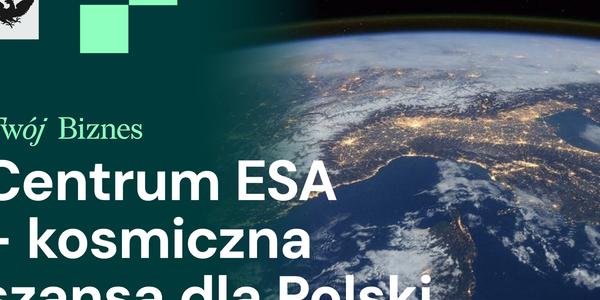
Poland is making a significant play for the European Space Agency's (ESA) center, a strategic move that promises to catapult the nation into a new era of technological advancement. The government's dedicated team is working on the specifics of this ambitious project, which, if successful, will not only bolster Poland's burgeoning space industry but also serve as a powerful engine for economic growth and innovation. The presence of an ESA center on Polish soil is seen as a massive stimulus, attracting further investment and enhancing the country's competitive edge in a rapidly evolving global market. This aligns with Poland's broader aspirations to be a key player in European technological development.
The presence of an ESA center on Polish soil will be a huge boost for the economy and innovation.
Meanwhile, the delicate diplomatic dance between the United States and Iran faces a critical juncture. The planned second round of talks in Islamabad is shrouded in uncertainty, with Tehran conditioning its participation on the U.S. lifting port blockades – a demand firmly rejected by the Trump administration. This impasse raises the specter of renewed conflict, especially as the current ceasefire nears its expiration. The coming days are pivotal, as a failure to reach an agreement could lead to a dangerous escalation, impacting not only regional stability but also global energy markets.
Adding to the complex geopolitical landscape, Russian oil is poised to resume its flow to Slovakia and Hungary through the vital Druzhba pipeline. This resumption is a significant development for both Central European nations, particularly as their support for financial aid to Kyiv has been contingent on the restoration of these energy supplies. While Russia acknowledges that its gas exports to China cannot compensate for the loss of the European market, the rerouting of oil signifies a complex interplay of energy security, political leverage, and international relations.
Tehran makes its participation in the negotiations conditional on the lifting of the blockade of ports, which the administration of Donald Trump does not agree to.
From the perspective of Rzeczpospolita, these developments paint a picture of a dynamic global stage where Poland is assertively carving out its niche in high-tech sectors, while simultaneously navigating the turbulent waters of international diplomacy and energy politics. The potential hosting of the ESA center is a testament to Poland's growing capabilities and its ambition to be at the forefront of European innovation. The ongoing U.S.-Iran negotiations and the energy supply dynamics in Central Europe underscore the interconnectedness of global affairs and the critical role Poland plays within this intricate web.
The transport of Russian oil via the Friendship pipeline to Slovakia and Hungary is to be resumed.
DistantNews Editorial
Originally published by Rzeczpospolita in Polish. Translated, summarized, and contextualized by our editorial team with added local perspective. Read our editorial standards.
More Stories
From Our Blog

What Gets Lost (and Found) When News Is Translated

The Critical Role of Diaspora Media in Global News

What Travellers Should Know About Countries with Restricted Press

A Digital Nomad's Guide to Following Local News

How the Same Story Looks Different in Different Countries
