


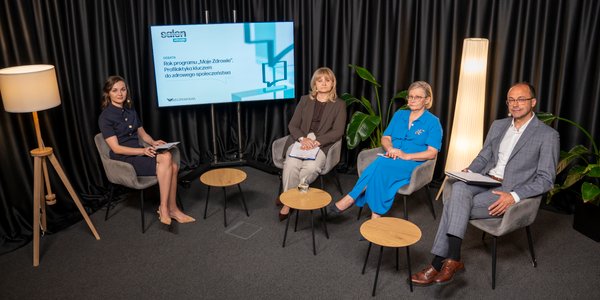
Poland's 'My Health' program marks one year, enrolling 2 million in preventive checks
Translated from Polish, summarized and contextualized by DistantNews.
At a glance
News
Sources not specified
New plan
- Poland's "My Health" program, launched in May 2025, has enrolled 2 million people over age 20 in free preventive health check-ups.
- The program begins with an online or in-person survey, guiding patients to necessary check-ups, with 80% of these conducted by doctors.
- A key component is a follow-up visit to assess risk factors for cancer and chronic diseases, including mental health and cognitive tests for seniors.
Poland's "My Health" program has successfully engaged 2 million individuals over the age of 20 in free preventive health screenings since its launch in May 2025. The initiative, managed by the National Health Fund (NFZ), aims to proactively identify health risks through a structured process.
Participation begins with a survey, accessible online via the Patient Internet Account or directly at a healthcare facility. This survey acts as a guide, directing patients toward specific check-ups based on their responses. Katarzyna Klonowska, head of the NFZ's Healthcare Benefits Department, explained that the entire process, from survey completion to initial actions by the clinic, is designed to be completed within a month. While doctors conduct 80% of the diagnostic tests, nurses and midwives also play a significant role.
So far, approximately 3 million people have completed the initial survey. Statistics indicate that women show greater interest in preventive care than men, constituting two-thirds of participants. Geographically, the Warmian-Masurian Voivodeship has seen the highest engagement, while the Masovian Voivodeship has shown the least. This disparity is partly attributed to the high availability of private healthcare in large urban centers, potentially reducing reliance on public NFZ services.
A crucial element of the "My Health" program is the concluding visit. Following diagnostic tests, patients meet with a healthcare professional to review their health status. This session involves a detailed assessment of risk factors for both oncological and chronic diseases. The program also addresses mental well-being, incorporating cognitive tests for older adults to aid in the early detection of neurological issues like dementia. Klonowska emphasized that this comprehensive review is vital, as timely interventions, such as lifestyle changes, further screenings, or vaccinations, can significantly mitigate disease progression.
DistantNews Editorial
Originally published by Rzeczpospolita in Polish. Translated, summarized, and contextualized by our editorial team with added local perspective. Read our editorial standards.
More Stories


From Our Blog

What Gets Lost (and Found) When News Is Translated

The Critical Role of Diaspora Media in Global News

What Travellers Should Know About Countries with Restricted Press

A Digital Nomad's Guide to Following Local News

How the Same Story Looks Different in Different Countries
