


Poland's Tech Race: AI Challenges and Strategic Focus
Translated from Polish, summarized and contextualized by DistantNews.
At a glance
News
Named sources
Context piece
- Polish scientific institutions lag significantly in global rankings, particularly in artificial intelligence research, hindering technological independence.
- Experts suggest Poland should focus on developing applications and software layers built on AI, rather than competing in fundamental research.
- The country needs to leverage its engineering talent to create unique Polish competitive advantages, moving beyond price-based outsourcing.
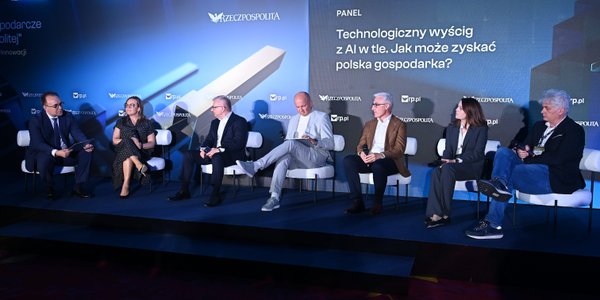
Poland faces a critical challenge in the global technological race, with its scientific institutions performing poorly in international rankings, especially in the burgeoning field of artificial intelligence. Professor Piotr Sankowski, director of the Ideas Institute, stated that Polish universities rarely break into the top 500 globally, and many rank much lower. This low visibility in AI research means little Polish work aligns with global trends or appears at leading scientific conferences, impacting the nation's technological independence.
The Ideas Institute is actively working to improve this situation, aiming to foster more breakthrough AI research in Poland that is practically applicable to the economy and can lead to the creation of new startups. However, the broader context suggests that competing at the forefront of fundamental AI research might be an uphill battle.
Nasze uczelnie zajmują w światowych rankingach najwyżej miejsca w okolicach pięćsetnych, a większość plasuje się znacznie dalej. Dotyczy to również badań nad sztuczną inteligencją – jesteśmy bardzo słabo widoczni, niewiele naszych badań wpisuje się w światowe trendy czy jest obecnych na wiodących konferencjach naukowych
Maja Schaefer, CEO and co-founder of Zowie, advocates for a "pick your battles" strategy. While acknowledging that Poland may not be able to rival the world's top institutions in pure scientific research, she believes the country can excel in developing applications built on AI, such as language models. "This is something Poland could specialize in," she stated.
Może nie jesteśmy w stanie rywalizować naukowo z największymi instytucjami na świecie, ale jest kilka obszarów, w których zdecydowanie możemy walczyć i wygrywać. Myślę tu o warstwie aplikacji budowanych nad sztuczną inteligencją, np. nad modelami językowymi – to jest coś, w czym Polska mogłaby się wyspecjalizować
Schaefer also highlighted a significant challenge: Poland's current role as an outsourcing hub. While the country is known for its engineering talent, the cost-competitiveness that attracted foreign companies is diminishing. She urged a shift from this model, suggesting that Poland should transform its development talent into a distinct, homegrown competitive advantage. This could involve creating software applications developed and built in Poland for the global market.
Robert Pławiak, CDIO/CTO of Polpharma, added a business perspective, emphasizing the importance of building upon existing ecosystems rather than reinventing the wheel. He noted that AI can drive systemic changes, but acknowledged that such transformations are often met with resistance due to human comfort with the status quo. The discussion underscored the need for strategic focus and leveraging existing strengths to carve out a unique niche for Poland in the AI-driven technological landscape.
Mamy ogromny talent inżynierski, jesteśmy z tego znani na świecie, ale mamy też związane z tym wyzwanie: Polska jest dziś poniekąd centrum outsourcingu i to musi się zmienić. Nie jesteśmy już tak konkurencyjni cenowo na globalnym rynku – a właśnie po to przychodziły tu amerykańskie spółki – i zaczyna być to widoczne na rynku pracy. Zastanówmy się więc, jak przekuć ten talent deweloperski w inną, własną, polską przewagę konkurencyjną. Myślę, że jest nią warstwa dostarczania oprogramowania faktycznie budowanego w Polsce i sprzedawanego na całym świecie – i to jest coś, co możemy robić już dziś
DistantNews Editorial
Originally published by Rzeczpospolita in Polish. Translated, summarized, and contextualized by our editorial team with added local perspective. Read our editorial standards.
More Stories



From Our Blog

What Gets Lost (and Found) When News Is Translated

The Critical Role of Diaspora Media in Global News

What Travellers Should Know About Countries with Restricted Press

A Digital Nomad's Guide to Following Local News

How the Same Story Looks Different in Different Countries
