


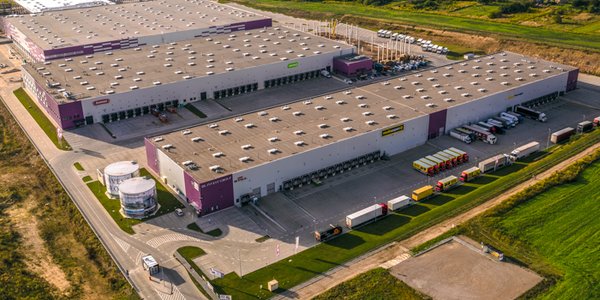
Poland's warehouse market braces for demographic shift
Translated from Polish, summarized and contextualized by DistantNews.
At a glance
News
Named sources
Context piece
- Poland's warehouse market faces significant changes due to a declining birth rate and an aging population.
- By 2035, the working-age population is projected to decrease by 20%, while households increase, driving demand for automation.
- E-commerce growth is expected to double by 2035, increasing parcel volume despite fewer workers, necessitating flexible automation solutions.
Poland's booming warehouse sector is bracing for a demographic shift that analysts predict will reshape the industry within a decade. A significantly low birth rate, currently at 1.14, and an aging population mean the country's working-age population will shrink by 20% by 2035. This demographic wave, a consequence of the post-war baby boom now entering retirement, will impact more than just social structures; it's poised to alter the warehouse market's operational landscape.
The fuel that has driven the Polish warehouse market for the last 30 years – excellent location, low rents, and the availability of cheap, skilled labor – is running out.
"The fuel that has driven the Polish warehouse market for the last 30 years – excellent location, low rents, and the availability of cheap, skilled labor – is running out," warns Jan Jakub Zombirt, an analyst at JLL. While metropolitan areas are expected to grow and absorb some of this demographic change, smaller regional cities will see populations decline by 5%, and rural areas will continue to shrink as young people move to urban centers.
We do not expect most of them to become fully automated 'dark warehouses'. The answer to the labor shortage will be modular automation – flexible, portable, and scalable.
Despite a projected overall population decrease of 1.2 million by 2035, the number of households is expected to rise by 0.2 million. This scenario, coupled with the labor shortage, points toward a significant increase in warehouse automation. Zombirt anticipates "modular automation" – flexible, portable, and scalable systems – rather than fully automated "dark warehouses." However, he notes that not all locations are equipped for even these advanced systems, emphasizing that floor quality, ceiling height, and power capacity will become critical factors in determining a facility's value.
Not every location and not every building is technically ready even for modular systems. Floor, height, power allocation – these parameters will start to determine the value of the object.
The e-commerce sector is expected to be a major driver of demand, with real e-commerce volumes in Poland projected to double by 2035. This growth will lead to more parcels being shipped, even as the labor pool shrinks. The penetration of e-commerce, currently at 9.1% nationally and significantly higher in major cities like Warsaw (17.3%), is expected to reach 14.6% and a value of 189 billion PLN within a decade. While overall demand for warehouse space may not see dramatic increases this year, the composition of tenants is shifting, with e-commerce companies becoming increasingly prominent.
Despite the shrinking population, by 2035, the real volume of e-commerce in Poland will double. Aging age cohorts will take online shopping habits with them. However, the structure and geography of orders will change. There will be more parcels, and significantly fewer hands in warehouses.
DistantNews Editorial
Originally published by Rzeczpospolita in Polish. Translated, summarized, and contextualized by our editorial team with added local perspective. Read our editorial standards.
More Stories



From Our Blog

What Gets Lost (and Found) When News Is Translated

The Critical Role of Diaspora Media in Global News

What Travellers Should Know About Countries with Restricted Press

A Digital Nomad's Guide to Following Local News

How the Same Story Looks Different in Different Countries
