


Police Saturation Won't Deter Organized Crime, Warns Ex-Interior Undersecretary
Translated from Spanish, summarized and contextualized by DistantNews.
At a glance
News
Named sources
Context piece
- Former Interior Undersecretary Felipe Harboe criticizes the government's strategy of police "coping" in high-crime neighborhoods.
- Harboe argues that frequent police operations without follow-up fail to deter organized crime, citing a massive increase in extortion.
- He advocates for deeper neighborhood interventions, intelligence, and robust witness protection to combat organized crime effectively.
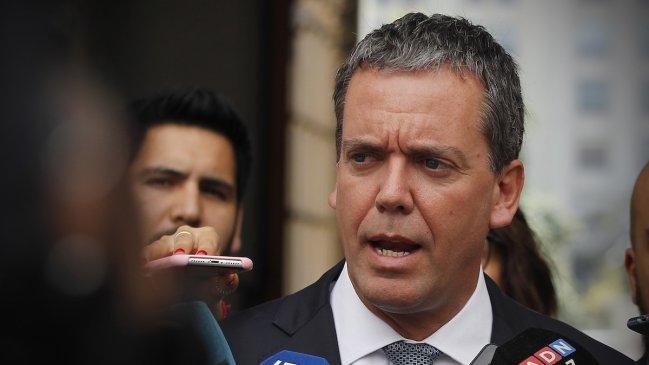
Felipe Harboe, former Interior Undersecretary, has voiced strong criticism regarding the government's strategy of concentrating police forces in the country's 50 most critical neighborhoods. Harboe argues that this approach, often referred to as "copamiento policial," is not the most effective method for reducing organized crime. He points out that previous implementations of similar popular measures, characterized by large-scale operations, lacked proper follow-up. "We were told 'there were 300 arrests,' but we didn't know how many had arrest warrants or were arrested for specific crimes," Harboe stated, highlighting the superficiality of such actions.
the measure popular of doing operations comes from many years.
Harboe emphasized that the real threat is not always visible on the streets; he cited a staggering increase of over 1,700% in extortion cases as a key indicator of organized crime's deep entrenchment in communities. "This is not deterred by police saturation, but by intelligence and intervention," he asserted. He stressed the need for interventions that go deeper into the neighborhoods and for a robust witness protection system to encourage reporting of crimes like extortion. "If a shopkeeper reports who is extorting them... they will have a very robust witness protection system, and unfortunately, that is not guaranteed today," Harboe added.
we were told 'there were 300 arrests,' but we didn't know how many had arrest warrants or were arrested for specific crimes, none of that.
Regarding the potential for another state of exception for public security, Harboe expressed reservations. He is not in favor of involving the military in public order tasks, citing their training, which is not geared towards such complex civilian matters. He also warned that historical comparisons show increased firepower among criminal gangs when the military is deployed on the streets. "The experience has been bad: where the military is taken to the street, the firepower of criminal gangs increases," he noted. Harboe also cautioned against the risk of military personnel facing legal repercussions due to a lack of preparation for de-escalation, drawing parallels to incidents during the social unrest. He urged the government to be transparent about the long-term role of the military in deterring terrorism, distinguishing their current mission from direct law enforcement.
what is growing is a crime that is not seen daily on the street, such as, for example, the extortion of commercial premises, which has increased by more than 1,700%, which is an indicator of the installation of organized crime in the neighborhoods.
DistantNews Editorial
Originally published by Cooperativa in Spanish. Translated, summarized, and contextualized by our editorial team with added local perspective. Read our editorial standards.
More Stories

From Our Blog

What Gets Lost (and Found) When News Is Translated

The Critical Role of Diaspora Media in Global News

What Travellers Should Know About Countries with Restricted Press

A Digital Nomad's Guide to Following Local News

How the Same Story Looks Different in Different Countries
