


Policy on student intake needs scrutiny
Translated from Malay, summarized and contextualized by DistantNews.
At a glance
News
Sources not specified
Context piece
- Malaysian public universities enroll 634,706 students, with 8.9% being international students, primarily at the postgraduate level.
- International students contribute to university finances and enhance research collaborations and international rankings.
- Public perception of limited opportunities for local students due to international enrollment persists, particularly for high-demand programs.
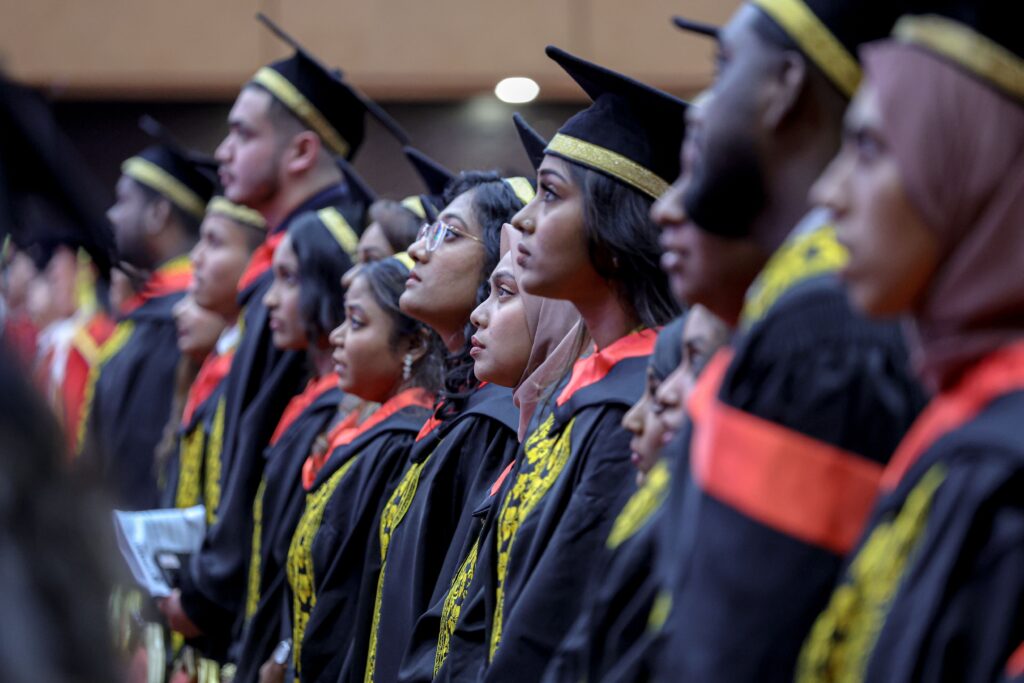
Public universities in Malaysia host a total enrollment of 634,706 students, with international students comprising 56,565, or 8.9 percent. The majority, 91.1 percent, are local students. This statistic highlights that local students remain the clear majority in public universities. For undergraduate programs, local students constitute 96.56 percent, while international students make up only 3.44 percent.
Conversely, at the postgraduate level, international students number 38,672, representing 33.74 percent of the total postgraduate enrollment. This indicates that most international students pursue master's and doctoral degrees, rather than competing directly with local students for undergraduate places. In five research universities, Universiti Malaya, Universiti Sains Malaysia, Universiti Kebangsaan Malaysia, Universiti Putra Malaysia, and Universiti Teknologi Malaysia, local students account for 78 percent of the 145,727 enrolled, with international students making up 22 percent. Notably, 68.5 percent of these international students are in postgraduate programs, aligning with the research focus of these institutions.
The Ministry of Higher Education clarifies that international students pay full fees without government subsidies and meet academic requirements. Their presence not only strengthens university finances but also fosters research collaborations, boosts high-impact publications, and supports Malaysia's standing in international rankings like the QS World University Rankings.
However, public perception remains a significant factor. Many parents and local students view the increasing number of international students as a reduction in opportunities for Malaysians, especially for competitive programs such as medicine, dentistry, pharmacy, law, and engineering. The core issue may not solely be the number of international students, but rather whether university capacity is expanding sufficiently to meet the growing demand for higher education among Malaysians. If capacity, facilities, and academic staff can be enhanced, internationalization and access for local students need not be seen as conflicting goals.
DistantNews Editorial
Originally published by Utusan Malaysia in Malay. Translated, summarized, and contextualized by our editorial team with added local perspective. Read our editorial standards.
More Stories



From Our Blog

What Gets Lost (and Found) When News Is Translated

The Critical Role of Diaspora Media in Global News

What Travellers Should Know About Countries with Restricted Press

A Digital Nomad's Guide to Following Local News

How the Same Story Looks Different in Different Countries
