


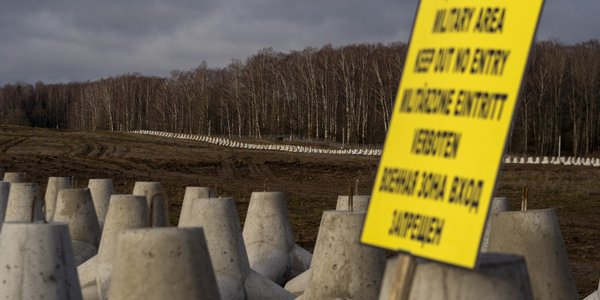
Polish Border Guard: 58 Russians Attempted Illegal Entry in First Half of Year
Translated from Polish, summarized and contextualized by DistantNews.
At a glance
News
Official statement
New plan
- Polish border guards denied entry to 128 Russian citizens in the first half of the year, primarily due to unclear stated purposes of stay.
- 58 Russians attempted to enter Poland illegally, with the highest numbers recorded at the Slovak-Polish and Russian-Polish borders.
- Overall, 11% fewer Russians entered Poland legally compared to the previous year, with a significant drop in vehicle crossings.
Polish border guards denied entry to 128 Russian citizens in the first half of the year, citing unclear intentions for their stay as the main reason. Additionally, 58 Russians attempted to cross into Poland illegally, with the Slovak-Polish and Russian-Polish borders seeing the highest numbers of such attempts. Ten Russians also tried to leave Poland illegally for third countries, mainly Germany.
The overall number of Russians legally entering Poland decreased by 11% compared to the same period last year, with 58,437 Russians crossing the border. This represents a drop of nearly 7,000 people. Vehicle traffic also saw a decline, with a 25% decrease in passenger cars, though bus traffic increased by 29%.
Authorities also refused entry to Russians at checkpoints, with 128 individuals being turned away. The most common reasons for refusal included a lack of proper documentation for the purpose and conditions of stay, and exceeding the 90-day limit in the EU. Thirty-seven Russians were also detained at the internal Schengen border for lacking valid travel documents or visas.
While the number of Russians attempting illegal entry or being denied visas rose, the number of Russians staying illegally in Poland slightly decreased. In the first half of the year, 390 cases of illegal stay were recorded, compared to 397 in the same period last year. Russians also filed 244 applications for international protection in Poland, making them the third-largest group seeking such status after Ukrainians and Belarusians.
DistantNews Editorial
Originally published by Rzeczpospolita in Polish. Translated, summarized, and contextualized by our editorial team with added local perspective. Read our editorial standards.
More Stories


From Our Blog

What Gets Lost (and Found) When News Is Translated

The Critical Role of Diaspora Media in Global News

What Travellers Should Know About Countries with Restricted Press

A Digital Nomad's Guide to Following Local News

How the Same Story Looks Different in Different Countries
