

Polish Energy Minister Warns of Rising Cyberattack Threats Amid Energy Transition
Translated from Polish, summarized and contextualized by DistantNews.
At a glance
News
Named sources
Ongoing story
- Poland's Minister of Energy, Miłosz Motyka, warned of increased cyberattack risks on the country's energy sector.
- The energy transition and development of renewable energy sources (OZE) are expanding the threat landscape.
- Motyka stressed that protecting digital networks is fundamental to national sovereignty and competitiveness.
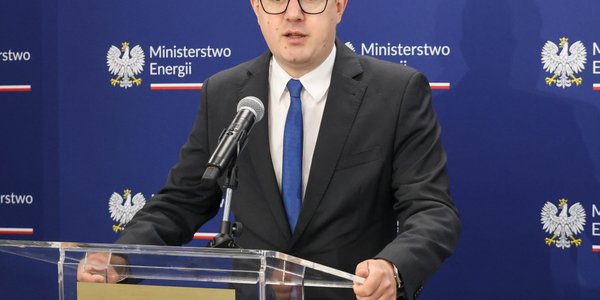
Poland's energy sector faces escalating cyberattack risks, according to Minister of Energy Miłosz Motyka. In a letter addressed to participants of the Cybersec Expo & Forum 2026, Motyka highlighted that the ongoing energy transformation and the rapid development of renewable energy sources (OZE) are significantly increasing the vulnerability of critical infrastructure.
We believe that only close partnership between the administration, infrastructure operators, the technological sector, the scientific community, and state services will allow us to meet the challenges that lie before us.
Motyka emphasized that the stability of energy supply is the bedrock of a modern economy. However, the accelerating digitalization, integration of operational and IT systems, and the expansion of OZE create new and amplified threats. The minister stated that cybersecurity should not be viewed as a mere cost but as a fundamental pillar of Poland's energy competitiveness and sovereignty. He warned that digital threats have moved from theoretical concerns to tangible dangers capable of paralyzing essential state functions.
Digital threats are no longer a theoretical problem, but have become a real threat that can paralyze fundamental branches of the state.
The minister elaborated on the potential cascading effects of cyberattacks, particularly on control systems in power plants and distribution networks. Such attacks could disrupt economic and social chains far beyond the targeted entity. To combat these threats, Motyka called for a broad coalition involving government, infrastructure operators, the technology sector, academia, and state security services. He echoed the conference's theme, "We are the firewall," stressing that collective partnership is essential to bolster the nation's cyber resilience and develop concrete recommendations for strengthening defenses across Poland and the wider region.
Attacks on critical infrastructure – transmission and distribution networks, control systems in power plants, or renewable energy facilities – can have consequences extending far beyond a single entity, hitting entire chains of economic and social dependencies.
DistantNews Editorial
Originally published by Rzeczpospolita in Polish. Translated, summarized, and contextualized by our editorial team with added local perspective. Read our editorial standards.
More Stories
From Our Blog

What Gets Lost (and Found) When News Is Translated

The Critical Role of Diaspora Media in Global News

What Travellers Should Know About Countries with Restricted Press

A Digital Nomad's Guide to Following Local News

How the Same Story Looks Different in Different Countries
