

Polish Politics: Tired of Bubbles, Divisions, and Polarization
Translated from Polish, summarized and contextualized by DistantNews.
At a glance
Interview
Sources not specified
Context piece
- Polish politics is characterized by a high level of conflict, with politicians often prioritizing campaign rhetoric over practice and exploiting fear to gain votes.
- The public is tired of political polarization and information bubbles, seeking a return to reasoned debate and factual reporting.
- A crisis in healthcare presents an opportunity for the ruling party to implement reforms, but all political groups share responsibility for the system's current state.
Polish politics is mired in a conflict that Jacek Nizinkiewicz, a journalist, argues is not new but has intensified. He observes that politicians frequently espouse values during election campaigns only to abandon them later. This political discourse increasingly relies on creating a sense of threat and identifying enemies, a strategy that yields short-term electoral gains but deepens societal divisions.
Politicians espouse values, or rather talk about values, have values on their lips during the election campaign, and then it's business as usual.
Nizinkiewicz emphasizes that the responsibility for the quality of public debate lies not only with politicians but also with voters and the media. He asserts that "truth does not lie in the middle," but rather "where it lies," criticizing the tendency to retreat into information bubbles that confirm existing beliefs instead of confronting facts. The journalist's role, he contends, is to consistently scrutinize those in power, a practice that is not "symmetrical criticism" but a fundamental media obligation essential for rebuilding public trust.
You play as society allows.
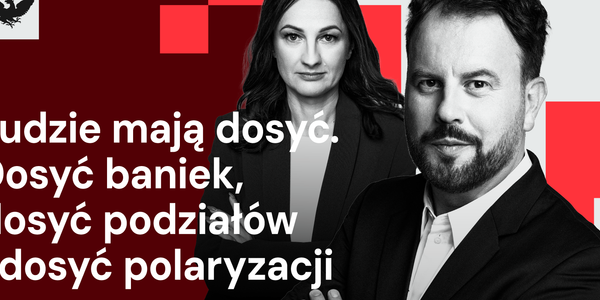
Despite the current prominence of radical voices, Nizinkiewicz believes that those who maintain calm and credibility will ultimately prevail. "People are fed up," he states, citing widespread exhaustion with "bubbles, divisions, and polarization." He sees a growing desire for dialogue based on arguments rather than emotions. The conversation then shifts to the "South Hospital" scandal, which Nizinkiewicz views as a potential catalyst for deep reforms, particularly in healthcare. He suggests the ruling party has a unique opportunity and public mandate to enact change, though he also places responsibility on all political factions for the system's long-standing neglect.
Truth does not lie somewhere in the middle, but truth lies where it lies.
Nizinkiewicz warns that radical political language can incite real violence and exacerbate societal rifts. "Politicians' words hurt and are dangerous," he concludes, highlighting the tangible consequences of inflammatory rhetoric in the public sphere.
Criticism of any government is not a manifestation of 'symmetrical criticism,' but a basic duty of the media.
DistantNews Editorial
Originally published by Rzeczpospolita in Polish. Translated, summarized, and contextualized by our editorial team with added local perspective. Read our editorial standards.
More Stories
From Our Blog

What Gets Lost (and Found) When News Is Translated

The Critical Role of Diaspora Media in Global News

What Travellers Should Know About Countries with Restricted Press

A Digital Nomad's Guide to Following Local News

How the Same Story Looks Different in Different Countries
