

Polish Ports Lose Millions as Companies Opt for Hamburg Due to Slow Checks
Translated from Polish, summarized and contextualized by DistantNews.
At a glance
News
Sources not specified
Context piece
- Polish companies are increasingly choosing to clear goods in Hamburg due to lengthy and uncoordinated border checks in Polish ports, leading to significant state revenue losses.
- State losses from customs duties on just cod and pollock cleared abroad are estimated at $12.5-$17.5 million annually, exceeding $25 million when other species are included.
- Polish ports face issues with underfunded services, lack of coordination, and fragmented IT systems, causing delays of 1-21 days compared to 2-5 days in Western Europe.
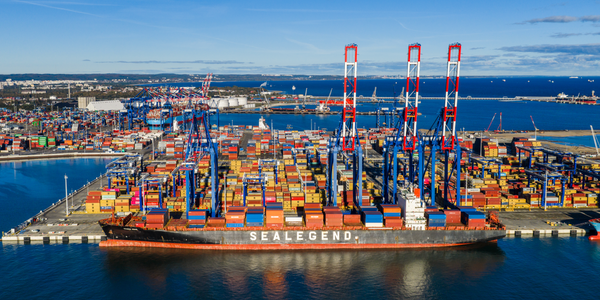
Polish companies are rerouting cargo through Hamburg and other Western European ports because of frustratingly slow and uncoordinated border inspections in their own country. This shift is costing Poland millions in lost customs revenue and hindering its fish processing industry.
The losses of the state budget from clearances lost solely on cod and pollock we estimate at PLN 50 to 70 million annually, because this raw material is cleared today, among others, in Hamburg and other ports of Western Europe, and enters Poland already as an intra-EU transfer. Taking into account other species cleared outside Poland, we are talking about losses exceeding PLN 100 million annually.
Maciej Kisiel, a board member of the Polish Association of Fish Processors (PSPR), estimates that the state loses $12.5 million to $17.5 million annually on cod and pollock alone, as these fish are cleared abroad and enter Poland as intra-EU shipments. When accounting for other species processed outside Poland, the total annual losses exceed $25 million.
The problem of Poland does not lie in EU law, but in the national organization of its application: in underfunding of services, lack of coordination, non-utilization of EU flexibility mechanisms, and fragmentation of IT systems.
Polish ports are plagued by inspection delays ranging from one to 21 days, starkly contrasting with the two to five days typical in Western European ports. Goods are subjected to numerous fragmented checks by services that fail to coordinate their efforts. While EU law provides a uniform framework for official controls, Poland's domestic organization of these procedures is the problem. Issues include underfunding of services, poor coordination, underutilization of EU flexibility mechanisms, and fragmented IT systems.
Polish fish processing industry relies significantly on raw material from third countries, processed into high-value-added products, therefore the efficiency of border controls is of strategic importance for this sector.
For instance, a single shipment requires border veterinarians to log into six separate, non-communicating IT systems. This inefficiency particularly impacts the import of frozen fish products destined for domestic processing. The Polish fish processing industry heavily relies on raw materials from third countries, making efficient border controls crucial for producing high-value goods. Kisiel highlighted that container downtime costs for just two companies amounted to $325,000 between January and April 2026, with the entire fish processing sector losing over $750,000. This, combined with the risk of contractual penalties and the difficulty of halting and restarting production lines, makes the higher transport costs to Hamburg a more attractive option for many processors.
The costs of container downtime for just two entrepreneurs amounted to PLN 1.3 million in the period from January to April 2026, and for the entire fish processing industry over PLN 3 million.
DistantNews Editorial
Originally published by Rzeczpospolita in Polish. Translated, summarized, and contextualized by our editorial team with added local perspective. Read our editorial standards.
More Stories


From Our Blog

What Gets Lost (and Found) When News Is Translated

The Critical Role of Diaspora Media in Global News

What Travellers Should Know About Countries with Restricted Press

A Digital Nomad's Guide to Following Local News

How the Same Story Looks Different in Different Countries
