

Polish President's Judicial Appointments Spark Controversy Over Legality
Translated from Polish, summarized and contextualized by DistantNews.
At a glance
Analysis
Sources not specified
Context piece
- Polish President Andrzej Duda appointed 211 new judicial assessors to common courts and 18 to administrative courts.
- Duda did not seek the Prime Minister's counter-signature for the appointments, citing a Constitutional Tribunal ruling that deemed the requirement unconstitutional.
- Legal experts and the article's author question the legality and validity of these appointments and the resulting judicial decisions, highlighting the ongoing political conflict over the judiciary.
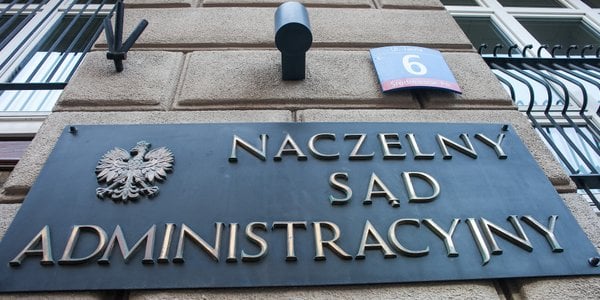
Polish President Andrzej Duda has appointed 211 new judicial assessors to common courts and 18 to administrative courts, a move intended to address staffing shortages. However, the appointments have ignited controversy as Duda bypassed the requirement for the Prime Minister's counter-signature. He justified this by referencing a recent Constitutional Tribunal ruling that declared the legal obligation for such a signature unconstitutional.
What else can we complicate here, gentlemen, what else?
This decision has raised significant legal and political questions. Experts consulted by the article's author argue that the Constitutional Tribunal's reasoning is flawed, bordering on the absurd. The core issue revolves around the legality of assessors appointed without the Prime Minister's explicit approval, and consequently, the validity of any rulings they might issue. The government's stance is that the appointments are legal, despite the lack of a published ruling from the Tribunal.
An proposed solution suggests that the Prime Minister could publish the President's appointment decrees in the Monitor Polski and provide a post-facto counter-signature, thereby resolving the procedural issue. However, the article questions the necessity of creating such a complex situation in the first place, suggesting it unnecessarily escalates the ongoing political conflict surrounding the judiciary.
The argument presented in the ruling, according to experts I spoke with, is at a level of absurdity reaching at least the highest peak of the Karakoram, but this is of secondary importance when the ruling has not been announced.
The author expresses concern that President Duda's actions perpetuate the uncertainty surrounding the status of judges and assessors. Previously, these individuals were somewhat insulated from the broader political disputes over judicial appointments. The continuous influx of judges with unquestioned status offered a glimmer of hope for the future of the judiciary, a hope now seemingly jeopardized by these latest developments.
The Prime Minister can order the publication of the President's decisions in the Monitor Polski [...] and at the same time provide a counter-signature.
DistantNews Editorial
Originally published by Rzeczpospolita in Polish. Translated, summarized, and contextualized by our editorial team with added local perspective. Read our editorial standards.
More Stories


From Our Blog

What Gets Lost (and Found) When News Is Translated

The Critical Role of Diaspora Media in Global News

What Travellers Should Know About Countries with Restricted Press

A Digital Nomad's Guide to Following Local News

How the Same Story Looks Different in Different Countries
