


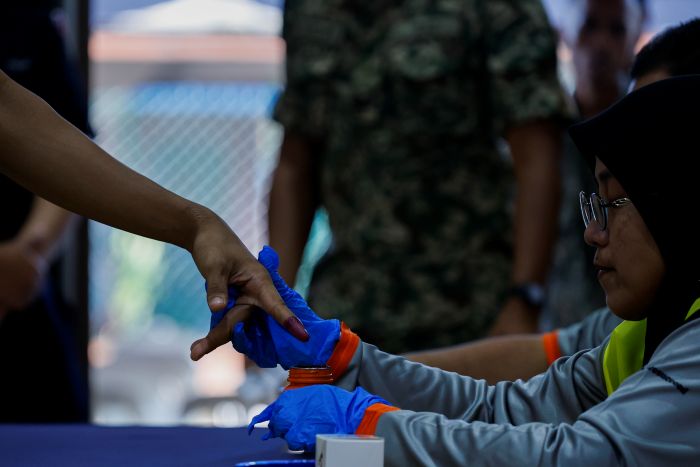
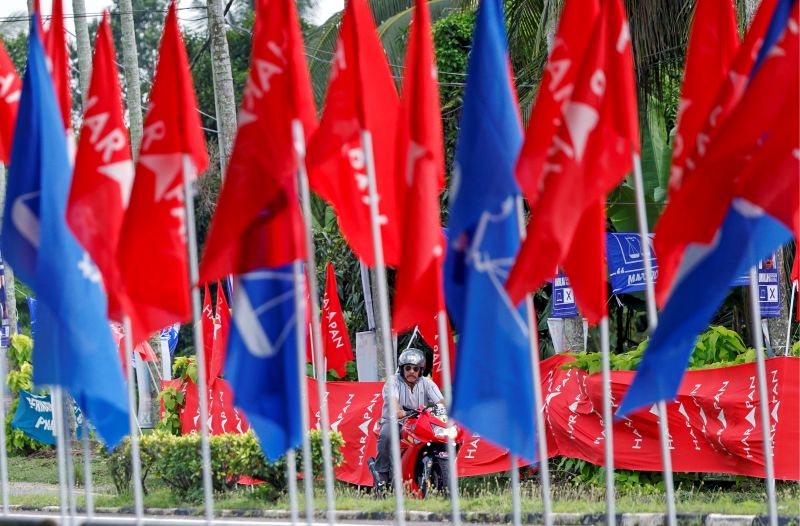
Political stability hinges on voter choices in upcoming elections
Translated from Malay, summarized and contextualized by DistantNews.
At a glance
News
Sources not specified
Context piece
- Malaysia's political landscape has been unstable since the 2018 general election, marked by frequent changes in prime ministers and coalition governments formed without shared political philosophies.
- The 2022 general election resulted in a hung parliament, requiring royal intervention to form a unity government led by Prime Minister Anwar Ibrahim, uniting parties with differing ideologies like DAP and UMNO.
- The upcoming 16th general election is crucial for determining long-term political stability, with voters needing to make informed choices to solidify the current coalition and Anwar Ibrahim's position.
Malaysia's political scene has experienced significant instability since the 14th General Election in 2018, a stark contrast to the relative stability seen in earlier periods. Before 2018, and particularly before 2008, the nation consistently saw the formation of strong majority governments, making the ruling parties secure from opposition challenges.
This equilibrium shifted after the 2008 election, which saw a substantial increase in opposition representation, challenging the ruling coalition. By the 2013 election, the government's parliamentary numbers had dwindled, culminating in a historic power shift to a new coalition in 2018. The post-2018 era has been characterized by what can be described as political 'chaos,' with ruling coalitions struggling for stability.
These coalitions were often formed out of necessity to establish a federal government, rather than from a shared political vision or core ideology. Consequently, these governments proved short-lived, failing to achieve genuine stability. The period following the 2018 election witnessed four different prime ministers before the November 2022 general election.
The 2022 election further complicated matters, resulting in a hung parliament where no single party or coalition secured the necessary majority of 122 seats. This impasse necessitated the intervention of the Yang di-Pertuan Agong, who, through his wisdom, facilitated a cooperation between ideologically diverse parties, including DAP and UMNO, to form the current federal government. Prime Minister Anwar Ibrahim's appointment brought a semblance of stability, but his position's true strength hinges on his performance and support in the upcoming 16th General Election.
The upcoming election holds significant weight for Malaysia's political future. Voters nationwide are urged to make judicious choices to ensure continued stability, potentially solidifying the current coalition and Anwar Ibrahim's leadership, particularly by demonstrating broad support, including from the Malay majority and the UMNO-DAP alliance. The recent Johor state election is seen as an early indicator of the political landscape and party strategies.
DistantNews Editorial
Originally published by Utusan Malaysia in Malay. Translated, summarized, and contextualized by our editorial team with added local perspective. Read our editorial standards.
More Stories


From Our Blog

What Gets Lost (and Found) When News Is Translated

The Critical Role of Diaspora Media in Global News

What Travellers Should Know About Countries with Restricted Press

A Digital Nomad's Guide to Following Local News

How the Same Story Looks Different in Different Countries
