


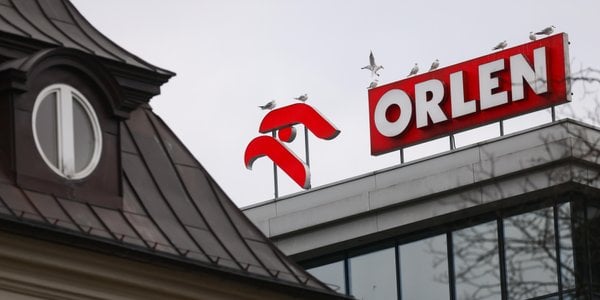
Power Struggle: Orlen and Synthos Clash Over Control of Poland's Nuclear Reactor Project
Translated from Polish, summarized and contextualized by DistantNews.
At a glance
News
Named sources
Context piece
- Orlen and Synthos are in a dispute over roles and financial control in a small modular reactor (SMR) project in Włocławek, Poland.
- Orlen seeks greater control as the primary investor and potential future licensee, questioning financial flows to Synthos.
- The disagreement could jeopardize the project, with Orlen exploring alternative "Canadian" nuclear technology options.
A significant dispute over power and finances is unfolding between Polish energy giants Orlen and Synthos regarding their joint small modular reactor (SMR) project in Włocławek. The core of the conflict lies in defining the roles and responsibilities within the crucial SMR initiative, with Orlen expressing serious doubts about financial flows to its partner.
Orlen insists it cannot be a passive shareholder in a project demanding extensive, long-term financing, complex administrative procedures, and regulatory accountability. The company desires a clearer structure where Orlen Synthos Green Energy, the special purpose vehicle, serves as a hub for SMR program development and technological expertise. Crucially, Orlen believes that as the investor, asset owner, and potential future licensee, it must have commensurate influence over decisions concerning the Włocławek project.
Orlen cannot play the role of a passive shareholder in a project that requires multi-year financing, the conduct of administrative procedures, and regulatory responsibility.
The energy conglomerate highlights that nuclear projects differ fundamentally from standard investments, requiring years of licensing, regulatory oversight, and the highest safety standards. While Orlen reaffirms its commitment to SMR development, it stresses that the cooperation model must reflect the investor's actual responsibilities. This includes clarifying the financing model, management and supervisory principles, investor accountability, and access to key technological assets.
Orlen – as the investor, asset owner, and potential future licensee – should have adequate influence over decisions concerning the Włocławek project.
Adding another layer to the disagreement, Orlen points out that the Włocławek project is situated on its own assets and is intrinsically linked to its industrial operations, with the potential for substantial Orlen financing. Regarding the Stawy Monowskie location, which is important to Synthos, Orlen suggests structuring cooperation so each party manages and finances aspects they realistically influence.
Should current negotiations fail to yield an agreement, Orlen is preparing to analyze alternative scenarios to ensure the project proceeds with transparency, adequate investor supervision, and adherence to regulatory requirements. The company is reportedly considering a "Canadian alternative" for nuclear technology, distinct from the current American approach, signaling a potential shift if the partnership with Synthos collapses.
Nuclear projects differ from ordinary investments – they require multi-year licensing, regulatory responsibility, and the highest safety standards. Orlen maintains its commitment to SMR development, but the cooperation model must reflect the investor's actual responsibility.
DistantNews Editorial
Originally published by Rzeczpospolita in Polish. Translated, summarized, and contextualized by our editorial team with added local perspective. Read our editorial standards.
More Stories



From Our Blog

What Gets Lost (and Found) When News Is Translated

The Critical Role of Diaspora Media in Global News

What Travellers Should Know About Countries with Restricted Press

A Digital Nomad's Guide to Following Local News

How the Same Story Looks Different in Different Countries
