


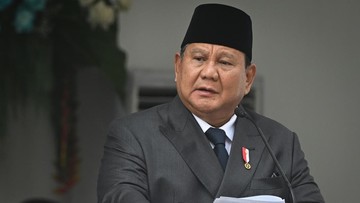
Prabowo Officially Signs Polri Law Revision
Translated from Indonesian, summarized and contextualized by DistantNews.
At a glance
News
Named sources
New plan
- Indonesian President Prabowo Subianto has signed a revision to the law concerning the Indonesian National Police (Polri).
- The revision, the third amendment to the 2002 law, was passed by the DPR on June 9, 2026.
- Civil society groups criticize the revision for lacking meaningful public participation and containing regulations contrary to police reform, particularly regarding the retirement age.
President Prabowo Subianto has officially signed into law the revision of Law No. 5 of 2026 concerning the Indonesian National Police (Polri). This marks the third amendment to Law No. 2 of 2002 regarding the national police force. The president's signature was recorded on June 17, 2026, according to the State Secretariat's legal information portal.
The revision was previously passed during a plenary session of the House of Representatives (DPR) on June 9, following unanimous approval from all factions. However, a coalition of civil society organizations, including KontraS, YLBHI, and ICJR, has voiced strong criticism. They argue that the revision was hastily drafted without adequate public consultation and contains provisions that contradict the mandate and spirit of police reform.
A key point of contention is the amendment to the retirement age for Polri members. The new regulation, specifically Article 30, paragraph (5), letter c, sets the maximum retirement age for four-star generals at 60 years, with a potential extension of one year or adjustments based on organizational needs by presidential decree. This contrasts with the previous regulation, which set the maximum age at 58 for all Polri members, regardless of rank, unless they possessed special skills deemed essential.
Laode M. Syarif, a member of the Gerakan Nurani Bangsa, echoed these concerns, stating that the legislative process in the DPR lacked sufficient public consultation. He believes the resulting law does not reflect the aspirations of the public, citing the Polri Law revision as an example that failed to accommodate recommendations from the Reform Commission.
The revision of the Polri Law, for example, did not accommodate all the recommendations given by the Reform Commission at all.
DistantNews Editorial
Originally published by CNN Indonesia in Indonesian. Translated, summarized, and contextualized by our editorial team with added local perspective. Read our editorial standards.
More Stories



From Our Blog

What Gets Lost (and Found) When News Is Translated

The Critical Role of Diaspora Media in Global News

What Travellers Should Know About Countries with Restricted Press

A Digital Nomad's Guide to Following Local News

How the Same Story Looks Different in Different Countries
