


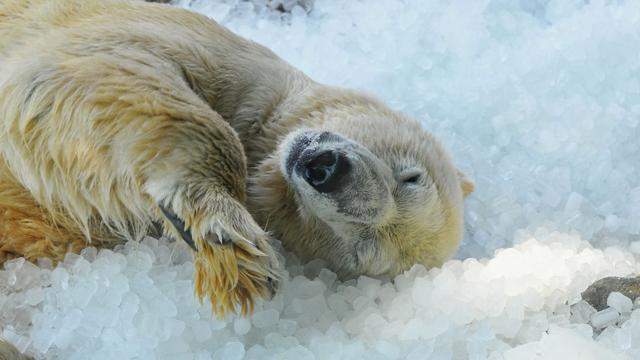
Prague Zoo gives polar bears tons of ice amid heatwave
Translated from German, summarized and contextualized by DistantNews.
At a glance
News
From a news agency
Context piece
- Prague Zoo provided nearly three tons of ice to its polar bear twins, Gregor and Aleut, amid a heatwave.
- The bears, born in Nuremberg and previously housed in Warsaw, enjoyed the icy refreshment in their enclosure.
- The zoo is constructing a new, larger enclosure for the polar bears, expected to be completed by 2029, while also offering visitors misting showers.
Prague Zoo is providing a special cool-down for its polar bear residents amidst a severe heatwave gripping the Czech Republic. The zoo recently delivered nearly three tons of ice to the enclosure of Gregor and Aleut, a pair of polar bear twins born in Nuremberg.
The ice cubes were dumped into the enclosure, where the young bears were seen rolling and playing in the frozen mounds. Gregor and Aleut have a history of relocation, having been born in Germany in December 2010, moving to Warsaw in 2013, and finally arriving at their current home in Prague after nearly eleven years in Poland.
The Czech meteorological service, CHMU, has forecast temperatures potentially reaching up to 40 degrees Celsius, making the ice a welcome relief for the animals. It wasn't just the polar bears enjoying the icy treat; parrots at the zoo also received ice cubes. For human visitors seeking respite from the heat, the zoo has installed over a dozen misting showers throughout its grounds.
Looking ahead, Prague Zoo is investing significantly in its polar bear facilities. A new, larger enclosure is under construction in the northwestern part of the zoo. This modern facility will offer the bears more space and a structurally separated resting area. The project carries a construction cost of approximately 30 million euros, with completion anticipated by 2029. The current enclosure dates back to the 1930s and is considered outdated.
DistantNews Editorial
Originally published by Die Zeit in German. Translated, summarized, and contextualized by our editorial team with added local perspective. Read our editorial standards.
More Stories


From Our Blog

What Gets Lost (and Found) When News Is Translated

How the Same Story Looks Different in Different Countries

The Critical Role of Diaspora Media in Global News

What Travellers Should Know About Countries with Restricted Press

A Digital Nomad's Guide to Following Local News
