


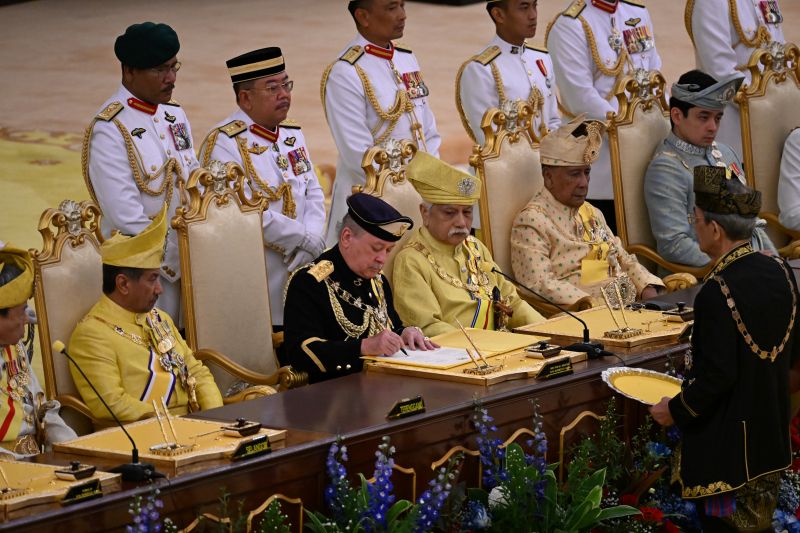
Prerogative powers of Malay Rulers are the nation's bastion of stability
Translated from Malay, summarized and contextualized by DistantNews.
At a glance
News
Sources not specified
Context piece
- The prerogative powers of Malay Rulers are crucial for national stability, especially during extraordinary situations, according to Datuk Dr. Wan Ahmad Fauzi Wan Husain.
- These powers, enshrined in the Federal Constitution and state constitutions, have proven effective in managing situations not explicitly detailed in writing.
- The experience of brief prime ministerial appointments highlights the ruler's role in ensuring administrative continuity.
The prerogative powers of the Malay Rulers serve as a vital mechanism for ensuring national stability, particularly in extraordinary circumstances, according to Datuk Dr. Wan Ahmad Fauzi Wan Husain, founder of Jurisprudens Watan and Associate Professor at the International Institute of Islamic Thought and Civilization (ISTAC) at the International Islamic University Malaysia (IIUM).
Our constitution inherits the existing constitutional customs of the Malay states, which were later strengthened when the rulers embraced Islamic Sharia.
He explained that Malaysia's constitutional system, rooted in the Malay Sultanate heritage, has demonstrated its capability in managing various situations not explicitly detailed in the Federal Constitution. The country's past experiences with frequent changes in prime ministers, for instance, underscore the significant role the rulers' prerogative powers play in maintaining administrative continuity.
"Our constitution inherits the existing constitutional customs of the Malay states, which were later strengthened when the rulers embraced Islamic Sharia," Wan Ahmad Fauzi stated. "The nature of our constitution, as a heritage of the Malay Sultanate, preserves the position of the ruling monarch within Malaysia's governance structure, granting them prerogative powers. This position is protected by Article 181(1) of the Federal Constitution and provisions within the State Constitutional Enactments."
The nature of our constitution, as a heritage of the Malay Sultanate, preserves the position of the ruling monarch within Malaysia's governance structure, granting them prerogative powers.
He further elaborated that the rulers' prerogative powers have effectively managed situations not specifically stipulated in the constitution. This comes in response to the assertion by Tengku Ampuan Pahang, Tunku Azizah Aminah Maimunah Iskandariah, who emphasized that the rulers' powers in appointments or granting pardons should not be questioned as they are clearly provided for in the Constitution and the Pahang State Constitution.
The ruling monarch upholds the Constitution and governs the legislative, executive, and judicial branches with trust.
Addressing claims that royal decisions can be influenced by political considerations, Wan Ahmad Fauzi clarified that politics cannot be entirely separated from the institution of royalty, as the monarch is the chief executive at both federal and state levels. However, he stressed the importance of distinguishing between party politics and the exercise of the ruler's prerogative powers. "The ruling monarch upholds the Constitution and governs the legislative, executive, and judicial branches with trust," he said. "Not only must the ruling monarch stand above party politics, but those who exercise the ruler's prerogative functions must also uphold the rule of law and the supremacy of the Constitution, transcending party political interests at the time of their oath of office."
Not only must the ruling monarch stand above party politics, but those who exercise the ruler's prerogative functions must also uphold the rule of law and the supremacy of the Constitution, transcending party political interests at the time of their oath of office.
DistantNews Editorial
Originally published by Utusan Malaysia in Malay. Translated, summarized, and contextualized by our editorial team with added local perspective. Read our editorial standards.
More Stories

From Our Blog

What Gets Lost (and Found) When News Is Translated

The Critical Role of Diaspora Media in Global News

What Travellers Should Know About Countries with Restricted Press

A Digital Nomad's Guide to Following Local News

How the Same Story Looks Different in Different Countries
