


President Lee: 'Never held Korea Military Academy responsible for three coups... unify academies swiftly'
Translated from Korean, summarized and contextualized by DistantNews.
At a glance
News
Official statement
New plan
- President Lee Jae-myung stated that the Korea Military Academy has never been held responsible for past military coups.
- He argued that merging the military academies into a unified institution would structurally reduce the possibility of future coups.
- The president urged the Ministry of National Defense to swiftly and decisively establish a unified military academy.
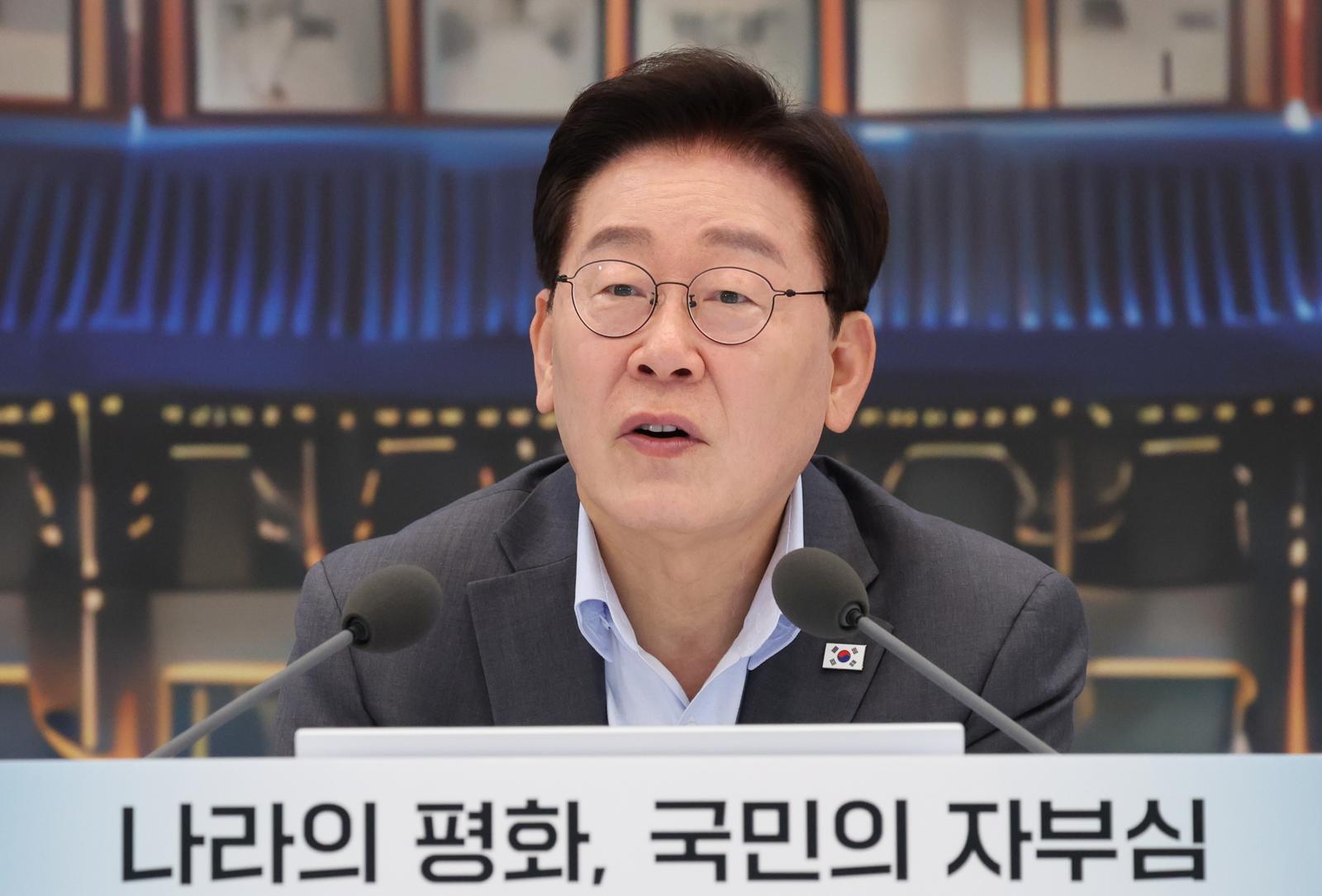
President Lee Jae-myung asserted that the Korea Military Academy has never faced accountability for its central role in three past military coups, despite South Korea's advancement into a developed nation. He argued that merging the separate military academies, Army, Navy, and Air Force, into a single, unified institution is essential to prevent future military insurrections.
How many military coups have there been in South Korea? The Korea Military Academy was at the center of three coups, yet it has never been held responsible.
During a defense ministry briefing, President Lee highlighted historical instances where graduates of the Army-centric academy were instrumental in coups. He cited the 1961 May 16 coup led by Army graduates, the 1979 December 12 coup involving Army graduates, and a recent internal disturbance in 2024 involving current and former Army generals. Lee questioned the notion that Army generals, who have previously supported such actions, would not do so again, emphasizing the need for structural safeguards.
Who would have thought that Army generals would conspire to stage a military coup in a country the world sees as developed? We must prevent this, structurally.
"How can we allow a situation where a specific branch's officers overwhelmingly dominate the military, occasionally staging coups that cripple the nation, and then face no consequences?" Lee asked, suggesting that a unified academy would dilute the influence of any single service branch and lessen the potential for such power grabs. He stressed that while most soldiers are loyal, the opportunity and incentive for a few to commit "unforgivable acts" must be eliminated through a rational educational system.
Can we allow a situation where officers from a specific branch overwhelmingly dominate the military, occasionally staging coups that cripple the nation, and then face no consequences?
President Lee's remarks directly challenge the Ministry of National Defense's previous explanations for establishing a unified academy. The ministry had previously stated the initiative was aimed at enhancing joint operations and preparing for future warfare, such as artificial intelligence and drone technology, distancing it from any connection to the recent internal disturbance involving Army figures. Lee's framing of the unification as a measure to prevent coups and hold the Army accountable introduces a politically charged dimension to the reform, potentially sparking debate about its true motivations.
It's not necessarily because people are bad, but because they act when given the opportunity and incentive. We absolutely need a rational educational system that prevents this.
DistantNews Editorial
Originally published by Hankyoreh in Korean. Translated, summarized, and contextualized by our editorial team with added local perspective. Read our editorial standards.
More Stories

From Our Blog

What Gets Lost (and Found) When News Is Translated

The Critical Role of Diaspora Media in Global News

What Travellers Should Know About Countries with Restricted Press

A Digital Nomad's Guide to Following Local News

How the Same Story Looks Different in Different Countries
