


Regarding Jeong Dong-young's proposal to 'call each other by name,' President Lee says 'must be cautious'
Translated from Korean, summarized and contextualized by DistantNews.
At a glance
News
Official statement
Context piece
- South Korea's Unification Ministry proposed initiating discussions on establishing a peace regime on the Korean Peninsula.
- The ministry suggested replacing the term 'enemy' used to refer to North Korea with more conciliatory language.
- President Lee expressed caution regarding the proposal, emphasizing the need for careful consideration of potential political disputes and the overall impact on peace and security.
South Korea's Unification Ministry has proposed initiating discussions to transition the Korean Peninsula from an armistice to a peace regime. The ministry also suggested reconsidering the use of confrontational language, such as referring to North Korea as the 'enemy,' in official documents.
We will initiate discussions on establishing a peace regime to build a virtuous cycle of peace.
During a policy briefing to President Lee Jae-myung, Unification Minister Jeong Dong-young outlined plans to commence peace regime discussions at the upcoming UN General Assembly in September. The ministry aims to broaden these discussions at the Asia-Pacific Economic Cooperation (APEC) summit in Shenzhen, China, in November. To support this initiative, Jeong proposed presenting a concrete vision for peaceful coexistence in President Lee's August 15 National Liberation Day address and activating a special envoy for Korean Peninsula peace in the latter half of the year.
Starting with calling each other by name, we must stop using language of confrontation and hatred towards each other, such as 'enemy'.
Minister Jeong specifically advocated for ending hostile rhetoric, starting with North and South Korea addressing each other by name. He indicated that the upcoming 2026 National Defense White Paper, under the Lee administration, should replace terms like 'enemy.' Jeong had previously stated that using 'enemy' is inappropriate for pursuing peaceful coexistence, suggesting that the term 'threat,' used by previous administrations, is more suitable than the current government's designation of 'enemy.'
We must be even more cautious as the expression of a single term can become a target of political conflict.
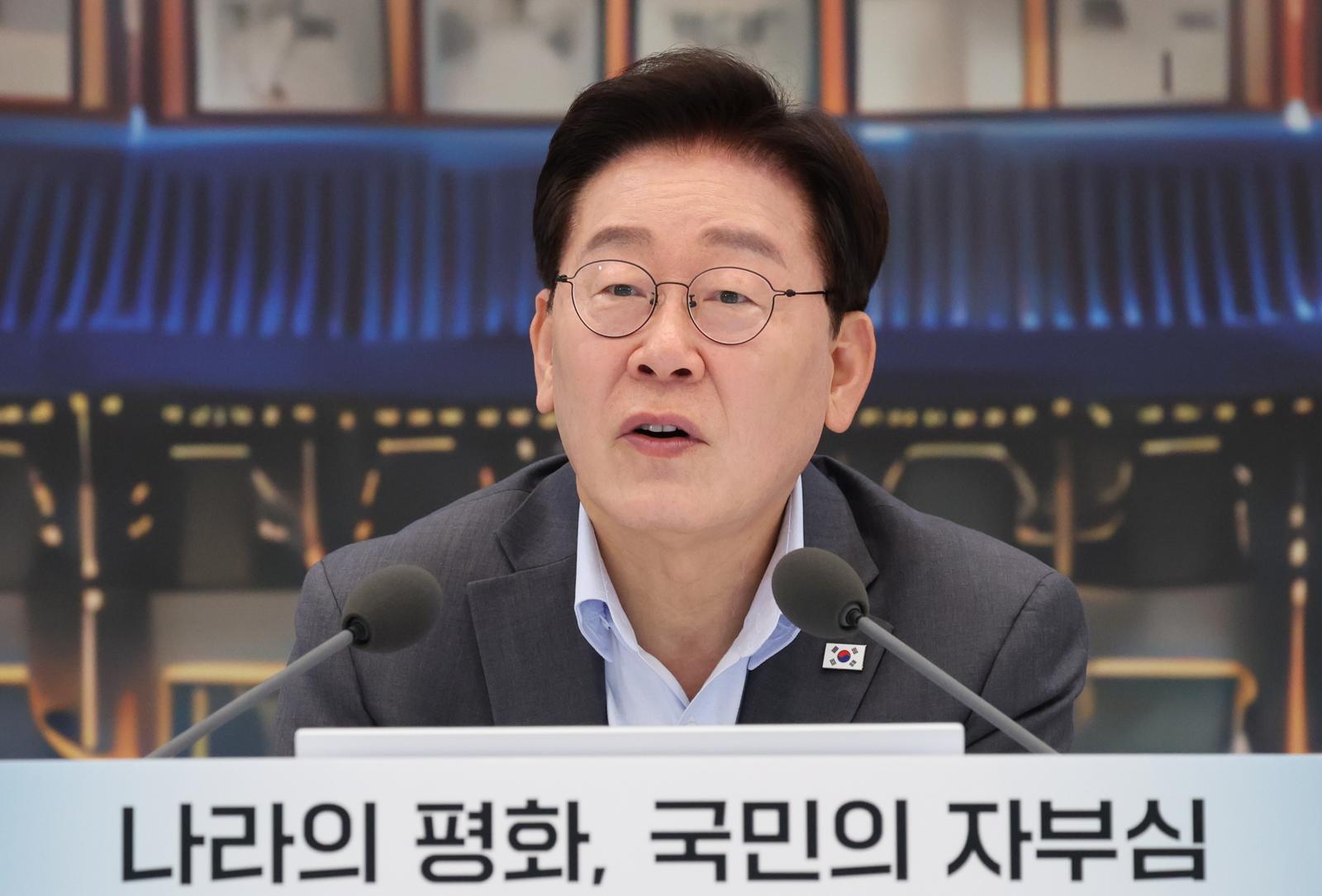
However, President Lee responded with caution regarding the proposal to use official names for North and South Korea. He expressed concern that such linguistic changes could become a subject of political contention. While acknowledging that discussing controversial topics can broaden perspectives and lead to better outcomes through sacrifice, Lee questioned whether these changes would ultimately benefit peace and security on the peninsula. He urged the Unification Ministry to deliberate further on the matter, emphasizing the need for a more measured approach.
While there is an effect of broadening horizons by advocating for these controversial issues and a aspect of creating a better situation through sacrifice, I sometimes have doubts whether it ultimately becomes a plus for peace and security on the Korean Peninsula.
DistantNews Editorial
Originally published by Hankyoreh in Korean. Translated, summarized, and contextualized by our editorial team with added local perspective. Read our editorial standards.
More Stories

From Our Blog

What Gets Lost (and Found) When News Is Translated

The Critical Role of Diaspora Media in Global News

What Travellers Should Know About Countries with Restricted Press

A Digital Nomad's Guide to Following Local News

How the Same Story Looks Different in Different Countries
