


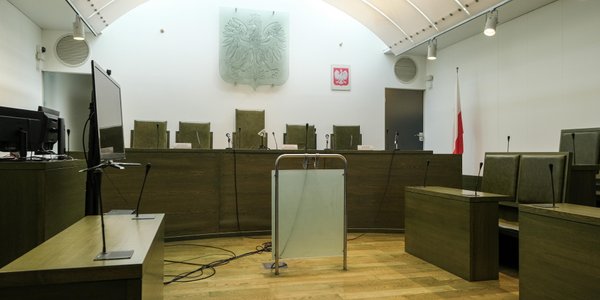
Procedure initiated for selecting Supreme Court lay judges for new term
Translated from Polish, summarized and contextualized by DistantNews.
At a glance
News
Sources not specified
Context piece
- Poland's Senate has begun the procedure to select lay judges for the Supreme Court's new term, following a 2018 law.
- Candidates must meet strict criteria, including Polish citizenship, good character, age between 40 and 60, and secondary education, while being barred from certain professions like law enforcement or politics.
- The selection process involves nominations by organizations or citizens, review by a Senate committee, and a final vote by the Senate, with a deadline for selection set for October 31, 2026.
Poland's Senate has initiated the process for selecting lay judges to the Supreme Court for a new term, a role established by a 2018 law. These lay judges participate in reviewing extraordinary appeals and disciplinary cases involving judges.
The selection process is rigorous. Candidates must possess sole Polish citizenship, be of impeccable character, be between 40 and 60 years old, and have at least a secondary education. Crucially, individuals employed in courts, prosecution, police, central government administration, or those working as lawyers, legal advisors, notaries, soldiers, clergy, or members of political parties are ineligible.
Nominations for lay judges can be submitted to the Senate Marshal by associations, social or professional organizations (excluding political parties), or by at least 100 eligible citizens. The deadline for submitting candidacies and required documents to the Senate Chancellery is June 30. The Senate Chancellery will then forward these applications to the Senate's Human Rights and Rule of Law Committee.
Following a committee review, which may include hearings, a list of candidates and their assessments will be presented to the Senate. The Senate is expected to make its final selection of lay judges by October 31, 2026. This process follows a previous selection in autumn 2022, where 26 out of 30 lay judges were nominated by the Committee for the Defence of Democracy, some of whom have since refused to adjudicate cases with judges appointed after 2017.
DistantNews Editorial
Originally published by Rzeczpospolita in Polish. Translated, summarized, and contextualized by our editorial team with added local perspective. Read our editorial standards.
More Stories



From Our Blog

What Gets Lost (and Found) When News Is Translated

The Critical Role of Diaspora Media in Global News

What Travellers Should Know About Countries with Restricted Press

A Digital Nomad's Guide to Following Local News

How the Same Story Looks Different in Different Countries
