


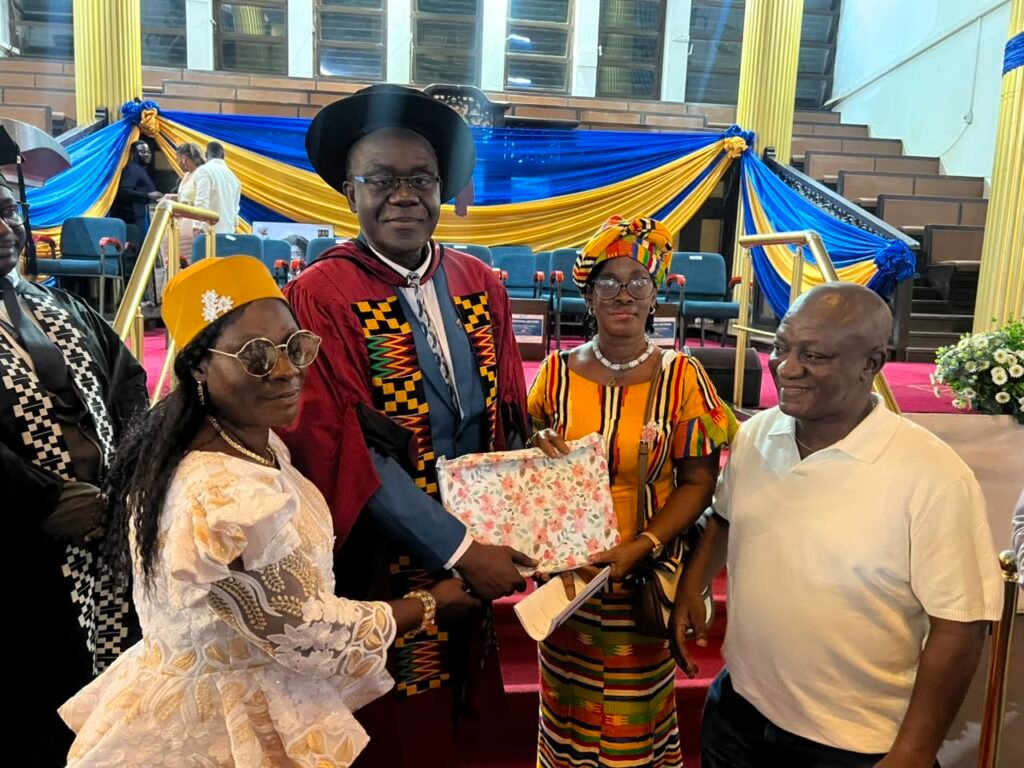
Prof. Kwabena Twerefou holds inaugural lecture; calls for better stewardship of Ghana’s natural resources
Summarized and contextualized by DistantNews.
At a glance
News
Sources not specified
New plan
- A University of Ghana professor urged for better stewardship of Ghana's natural resources, warning of threats to long-term development.
- Professor Daniel Kwabena Twerefou highlighted that despite abundant resources, poor governance hinders their effective management for present and future generations.
- He called for stronger conservation, accountability, value addition to exports, and integration of indigenous knowledge into environmental governance.
Ghana must strengthen its stewardship of natural resources to secure its long-term development, a prominent economics professor warned.
Professor Daniel Kwabena Twerefou of the University of Ghana delivered his inaugural lecture on July 30, 2026, themed “Ghana’s Stewardship Paradox: Rich in Resources, Poor in Governance.” He argued that the nation's abundant forests, rivers, fertile lands, minerals, and biodiversity are not being managed effectively, jeopardizing sustainable development for current and future generations.
Twerefou emphasized that environmental protection is crucial for economic development, as all productive activities rely on natural resources. He cited the destruction of trees near water bodies and pollution from illegal mining as examples of poor environmental stewardship. "If you pollute all these rivers and spoil all these lands, what are you going to eat and what are you going to drink?" he questioned, highlighting the direct threat to food production, clean water, and public health.
Ghana’s Stewardship Paradox: Rich in Resources, Poor in Governance.
The professor advocated treating natural resources as natural capital, demanding robust conservation measures and increased accountability. He urged Ghana to add value to its resources before exporting them to generate greater revenue and economic benefits. Twerefou also supported the "polluter pays" principle, ensuring those who damage the environment bear the costs. Furthermore, he called for integrating indigenous knowledge into environmental governance, recognizing its historical role in promoting sustainability.
Despite expanding environmental laws and institutions, Twerefou observed that weak enforcement, poor accountability, overlapping mandates, and insufficient resources continue to undermine effective governance. He concluded that sustainable development requires stronger institutions, better accountability, and policies that recognize the full value of ecosystems, ensuring that current resource use does not compromise future welfare.
If you pollute all these rivers and spoil all these lands, what are you going to eat and what are you going to drink?
DistantNews Editorial
Originally published by Ghanaian Times. Summarized and contextualized by our editorial team with added local perspective. Read our editorial standards.
More Stories


From Our Blog

What Gets Lost (and Found) When News Is Translated

The Critical Role of Diaspora Media in Global News

What Travellers Should Know About Countries with Restricted Press

A Digital Nomad's Guide to Following Local News

How the Same Story Looks Different in Different Countries
