


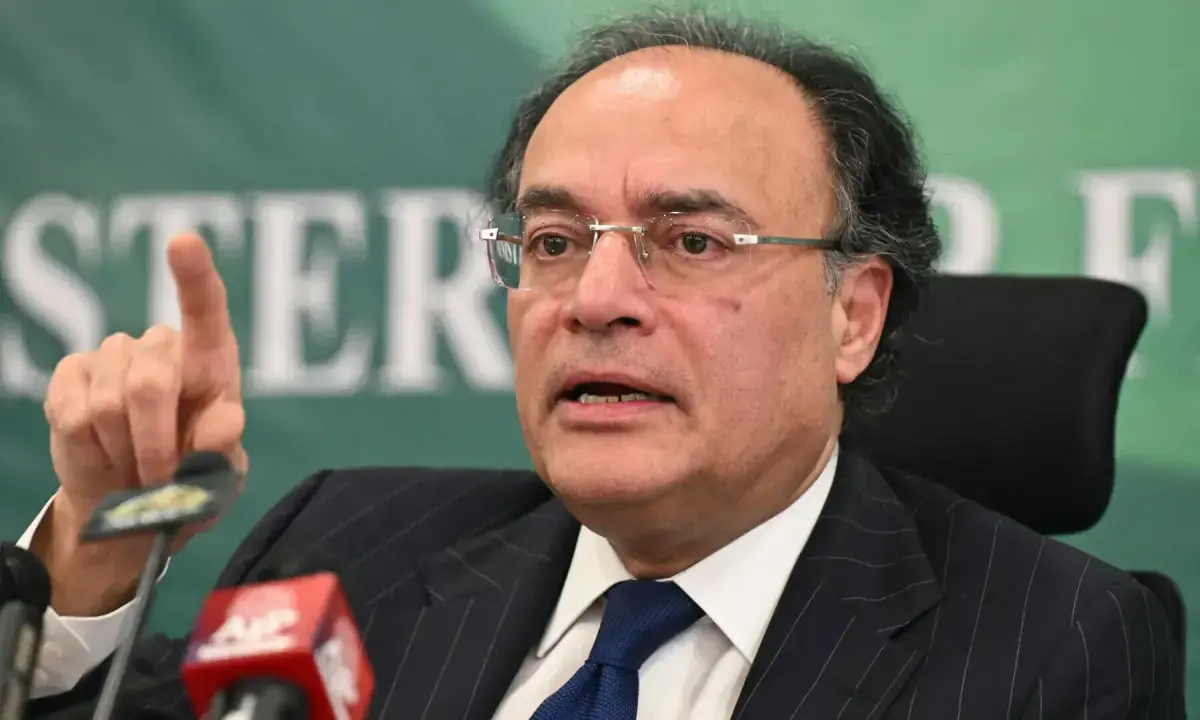
Prolonged Iran War to Have Serious Consequences, Warns Pakistan Finance Minister
Translated from English, summarized and contextualized by DistantNews.
TLDR
- Pakistan's Finance Minister Muhammad Aurangzeb warns that a prolonged conflict in the Middle East would have severe financial consequences for Pakistan and the global economy.
- He stated that Pakistan's leadership made significant efforts over the weekend to support diplomatic engagement between the US and Iran, with discussions ongoing.
- Aurangzeb highlighted the economic risks, particularly concerning energy security and oil prices, while noting that dialogue and diplomacy are the way forward.
Pakistan is closely monitoring the escalating tensions in the Middle East, with Finance Minister Muhammad Aurangzeb issuing a stark warning about the potential economic fallout of a prolonged conflict. Speaking to CNBC, Aurangzeb emphasized that a protracted war would inflict serious financial damage not only on Pakistan but also on the global economy.
So, our leadership is still at it. And very earnest effort was made over the weekend, and that was recognised both by the US leadership and the Iranian leadership.
Aurangzeb revealed that Pakistan's leadership had engaged in "very earnest effort" over the weekend to foster diplomatic dialogue between the United States and Iran. He confirmed that these diplomatic efforts are ongoing and have been acknowledged by both US and Iranian leadership. The minister stressed the importance of maintaining a ceasefire and continuing engagement, viewing the resumption of face-to-face discussions after 50 years as a significant breakthrough.
I think the first thing, the important thing is that the ceasefire continues.
From Pakistan's perspective, the economic implications are paramount. As a nation heavily reliant on imported fuel, disruptions to regional shipping lanes or a surge in global oil prices would exacerbate existing fiscal pressures. Aurangzeb noted that while Pakistan's immediate oil reserves are adequate, the country's dependence on commercial reserves makes it vulnerable to price volatility. He underscored that dialogue and diplomacy remain the essential path forward, even for countries not directly involved in the conflict.
It’s about 50 years later that there were face-to-face discussions between Iran and the United States. And I think that in itself is a big achievement.
This situation highlights Pakistan's delicate position, caught between regional instability and its own economic vulnerabilities. The government's active diplomatic engagement, as highlighted by Aurangzeb, reflects a strategic effort to mitigate risks and promote stability. The focus on financial impact and energy security underscores how deeply intertwined Pakistan's economic well-being is with the geopolitical landscape of the Middle East, a reality often underappreciated in Western coverage.
We have to be hopeful because dialogue and diplomacy is the way forward.
DistantNews Editorial
Originally published by Dawn in English. Translated, summarized, and contextualized by our editorial team with added local perspective. Read our editorial standards.
More Stories

From Our Blog

What Gets Lost (and Found) When News Is Translated

The Critical Role of Diaspora Media in Global News

What Travellers Should Know About Countries with Restricted Press

A Digital Nomad's Guide to Following Local News

How the Same Story Looks Different in Different Countries
