


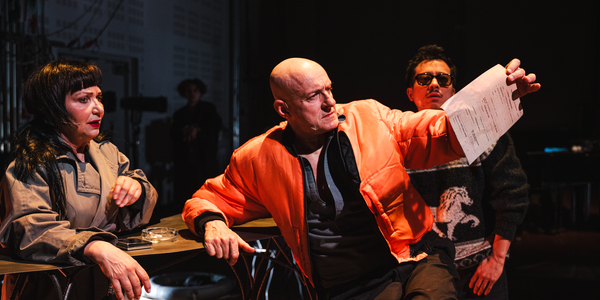
Pulverkopf: A Theatrical Journey Through Identity and History
Translated from Polish, summarized and contextualized by DistantNews.
TLDR
- The novel "Pulverkopf" by Edward Pasewicz, adapted for the stage by Krzysztof Szekalski and directed by Katarzyna Kalwat, explores complex themes of identity, history, and sexuality.
- The story is set in Międzyrzecz, Poland (formerly Meseritz, Prussia), a region with a mixed German, Polish, Jewish, and Russian past, and delves into the life of Patryk Werhunt as he pieces together his family history and identity.
- The play also incorporates the story of Norbert von Hannenheim, a German avant-garde composer deemed
Edward Pasewicz's "Pulverkopf" is a novel that demands much from its reader, weaving a complex tapestry of narratives, characters, and their diverse stories. The author undertakes the heroic task of describing a world and the individual within it. The setting is today's Polish Międzyrzecz in Wielkopolska, formerly Meseritz in Prussia—a place of national and cultural melting pot where Germans, Poles, Jews, and later Russians mingled for years.
The novel "Pulverkopf" by Edward Pasewicz, considered, not without reason, to be outstanding, requires the reader not to get lost in the excess of threads, characters, and their diverse narratives.
The narrative intertwines brutal events, such as the killing of patients at the local psychiatric hospital by Nazi doctors, with a metaphysical search for a code of immortality supposedly inscribed in Scarlatti's music. The central figure is Patryk Werhunt, a resident of Międzyrzecz, who attempts to assemble a clear picture from these fragmented histories, primarily to understand his own identity. He gathers fragments of family destinies, seeks facts, becomes entangled in an accusation of hastening Tański's death, and in an act of self-discovery, tries to define his sexual identity.
This world is today's Polish Międzyrzecz in Wielkopolska, formerly Meseritz, belonging to Prussia. It is also a national and cultural melting pot where Germans, Poles, Jews, and later Russians have mixed for years.
Among the specters of the past is the authentic and significant figure of Norbert von Hannenheim, a prominent German avant-garde composer. Declared a "degenerate" artist by the Nazi regime and condemned to oblivion, Hannenheim, plagued by obsessions, was admitted to the Meseritz–Obrawalde hospital. He survived but died of exhaustion shortly after liberation. Hannenheim fascinates Patryk, becoming his recurring hero. Pasewicz guides the reader through narrative depths, aided by the publisher's use of different fonts, column widths, and footnotes. However, the author doesn't always maintain narrative consistency. This challenge is even greater, perhaps impossible, in a theatrical adaptation, especially since Pasewicz and co-author Krzysztof Szekalski have added material not included in the already extensive novel.
The individual is Patryk Werhunt, living in Międzyrzecz, who tries to assemble a clear picture from these puzzles of different stories and, above all, to understand who he actually is.
Director Katarzyna Kalwat, herself a psychology graduate, favors themes of sexual, social, and artistic identity. Her award-winning "Travels to Reims" focused on sociologist Didier Eribon's return to his class origins. In another play, she explored French philosopher Sara Kofman's oscillation between Jewish identity and assimilation. In "Pulverkopf," the director seems more interested in the research process itself than in the individual seeking self-definition. Nevertheless, the music in the play is significant.
Among the ghosts of the past is also an important, authentic figure – Norbert von Hannenheim, an outstanding individual of the German avant-garde, classified by the Nazi authorities as a degenerate composer and condemned to non-existence.
DistantNews Editorial
Originally published by Rzeczpospolita in Polish. Translated, summarized, and contextualized by our editorial team with added local perspective. Read our editorial standards.
More Stories



From Our Blog

What Gets Lost (and Found) When News Is Translated

The Critical Role of Diaspora Media in Global News

What Travellers Should Know About Countries with Restricted Press

A Digital Nomad's Guide to Following Local News

How the Same Story Looks Different in Different Countries
