


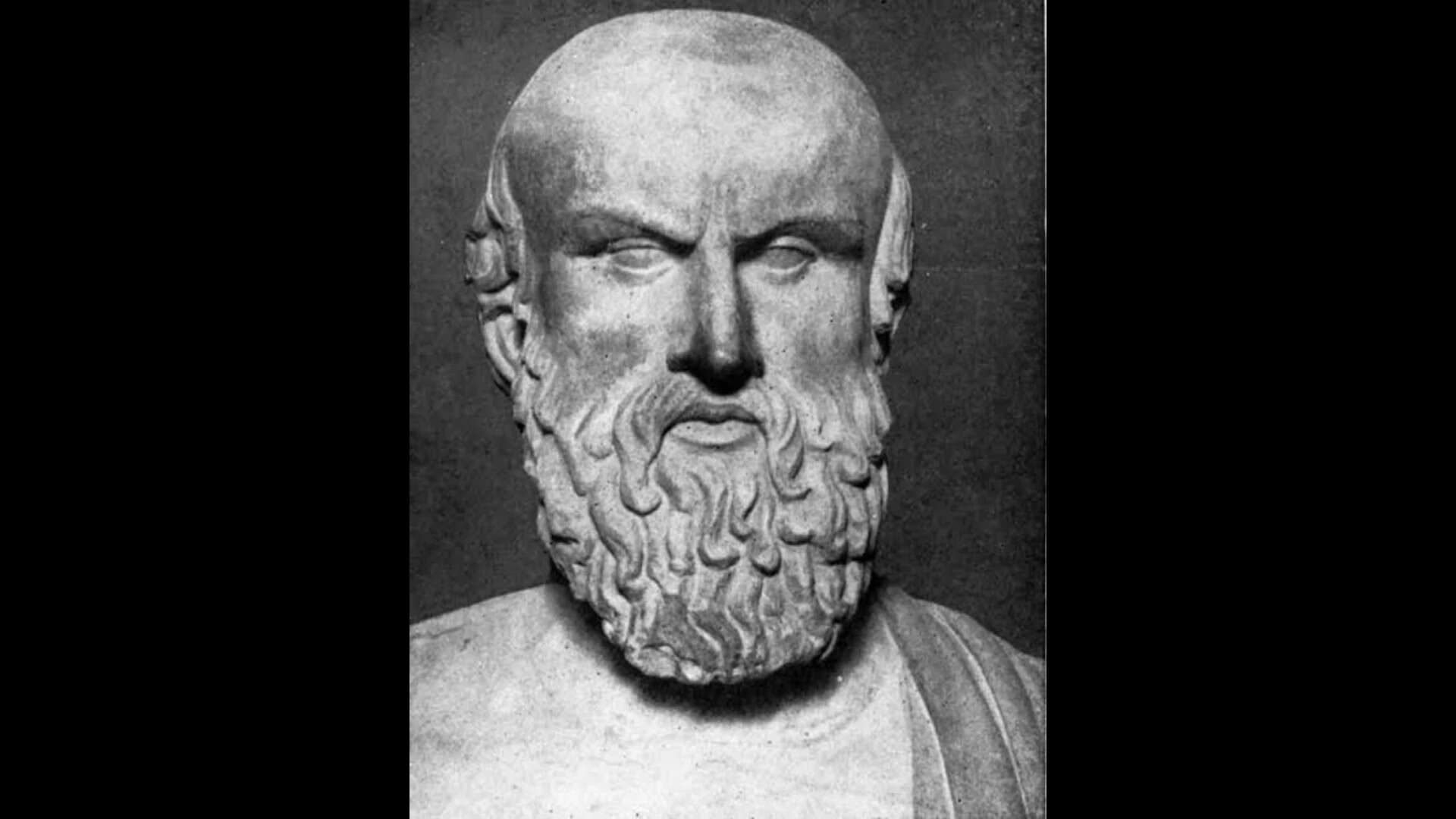
Quote of the day by Aeschylus: 'When one is wise, it's wisest to seem foolish' and a lesson on strategic survival
Summarized and contextualized by DistantNews.
At a glance
In-depth
Sources not specified
Context piece
- Ancient Greek playwright Aeschylus is celebrated for his quote on strategic survival: 'When one is wise, it's wisest to seem foolish.'
- The quote, from his play 'Prometheus Bound,' advises feigning ignorance when facing powerful adversaries to avoid becoming a target.
- Aeschylus also revolutionized theater by introducing a second actor, enabling dialogue and dramatic interaction, and is credited with writing about 90 plays, though only seven survive.
Ancient Greek playwright Aeschylus, known as the 'Father of Tragedy,' offers a timeless lesson in strategic survival with his quote: 'When one is wise, it's wisest to seem foolish.' This advice, delivered by Oceanus to Prometheus in the play 'Prometheus Bound,' suggests that confronting powerful tyranny, like that of Zeus, is best managed by appearing less intelligent or by remaining inconspicuous.
Flaunting intellect or openly defying those in power can quickly make one a target, especially for insecure leaders or bosses. By 'seeming foolish,' individuals can disarm their adversaries, who then lower their guard, perceiving no threat. This allows the seemingly foolish person to observe and gather information while remaining underestimated.
Arguing directly with a stubborn, powerful force is often futile. Feigning ignorance helps avoid unnecessary conflicts and conserves energy for more critical moments. The quote's context involves Prometheus being chained to a rock by Zeus for stealing fire for humanity. Oceanus urged Prometheus to temper his defiance, but the quote itself has endured as a strategy for political and social navigation.
Aeschylus was not only a playwright but also a soldier who fought in the Persian Wars. His theatrical innovations, including adding a second actor to the stage, fundamentally changed Greek drama, enabling dialogue and interaction. He also popularized elaborate costumes, stage designs, and masks, though only seven of his approximately 90 plays have survived.
When one is wise, it's wisest to seem foolish
DistantNews Editorial
Originally published by Times of India. Summarized and contextualized by our editorial team with added local perspective. Read our editorial standards.
More Stories



From Our Blog

What Press Freedom Means for the News You Read

What Gets Lost (and Found) When News Is Translated

The Critical Role of Diaspora Media in Global News

What Travellers Should Know About Countries with Restricted Press

A Digital Nomad's Guide to Following Local News
