


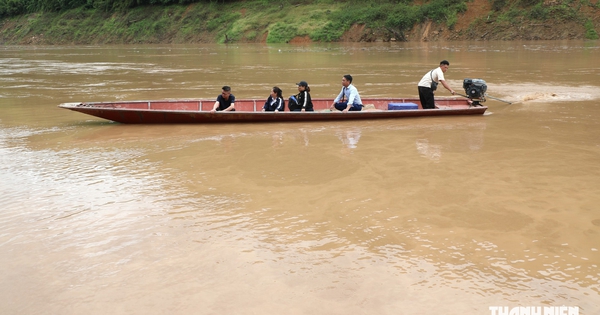
Remote village receives mobile government services for birth registrations
Translated from Vietnamese and summarized by DistantNews. Read the original for the full story.
At a glance
News
Sources not specified
Context piece
- Government officials traveled to the remote Piêng Luống village in Nghệ An province to provide essential public services, including birth registrations.
- This initiative aims to overcome geographical barriers, saving villagers time and money previously spent on travel and crossing the river.
- The mobile service unit successfully registered children late for birth certificates and addressed the needs of families, including those displaced by development projects.
In the remote Piêng Luống village of Nhôn Mai commune, Nghệ An province, a significant step was taken to bridge the gap between citizens and government services. For the first time, a couple, Moong Văn Phong and his wife, were able to obtain birth certificates for their two children, aged 15 and 13, thanks to the Commune's Public Service Center bringing its services directly to their doorstep.
This initiative, a weekly "expedition" by three officials from the Nhôn Mai Public Service Center, involves traveling by boat across a river to reach Piêng Luống. The journey, which costs 50,000 Vietnamese Dong per person with a motorbike, highlights the logistical challenges faced by residents. By bringing essential services like birth registrations, computer equipment, and seals to the village, the center alleviates the financial burden and time commitment for the local population.
The mobile service unit also plays a crucial role in community development. Teachers from Nhôn Mai Primary School accompanied the officials, using the opportunity to encourage parents to enroll their three-year-old children in kindergarten. Many children in the village, including some who were yet to be registered for birth, were not attending school. The presence of the public service center facilitated these efforts, making it easier for parents like Seo Văn Hải, who had previously been unable to complete the registration due to forgetting necessary documents, to finally get their children's birth certificates.
The service also addressed the needs of families facing unique circumstances. Moong Văn Phong, originally from Hữu Dương commune, and a few others were displaced over 20 years ago due to the Bản Vẽ hydroelectric dam construction. Unable to resettle in the designated areas over 120 km away, they established new, albeit unstable, residences. This lack of a fixed address meant Phong had not been able to obtain his own citizen ID card, but his wife's local ties allowed him to proceed with registering their children. The mobile unit's visit provided a vital opportunity for families like his to access long-overdue administrative procedures.
About this summary
Originally published by Thanh Niên in Vietnamese. Translated, summarized, and contextualized automatically by DistantNews, with a note on how the source frames the story. Not individually reviewed before publishing. How this works.
More Stories

From Our Blog

What Gets Lost (and Found) When News Is Translated

The Critical Role of Diaspora Media in Global News

What Travellers Should Know About Countries with Restricted Press

A Digital Nomad's Guide to Following Local News

How the Same Story Looks Different in Different Countries
