

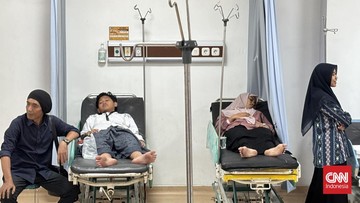

Respiratory Infections Top 50,000 in Indonesian Areas Hit by Wildfires
Translated from Indonesian and summarized by DistantNews. Read the original for the full story.
At a glance
News
Named sources
Context piece
- Indonesia recorded 50,891 acute respiratory infection cases in wildfire-affected areas between July and August 2026.
- A respiratory specialist said smoke, dust and airborne particles during the dry season can increase respiratory problems.
- She urged people to seek medical care if symptoms worsen, with children, older adults and people with chronic illnesses particularly vulnerable.
Acute respiratory infections rose sharply in Indonesian areas affected by forest and land fires, with the Health Ministry recording 50,891 cases from July through August 2026.
Dr Ika Trisnawati, an internal medicine specialist focusing on pulmonary disease and a lecturer at Gadjah Mada University, said wildfire smoke can increase respiratory problems. During the dry season, she explained, haze and dust particles travel more easily through the air and can be inhaled.
The increase in respiratory infections during the dry season occurs because there are naturally many dust particles. Small dust particles carried by the wind remain in the air and are then inhaled.
Common symptoms include coughing and a runny nose affecting the nose, throat and respiratory tract. Fever can accompany an infection. Dr Ika said a dry cough commonly appears at the start of a viral infection, while phlegm that becomes yellowish may indicate a bacterial infection.
For mild respiratory infections caused by brief exposure to dust and smoke, the condition generally improves within three to five days.
Mild respiratory infections caused by brief exposure to dust and smoke generally improve within three to five days, she said. People should seek medical attention if symptoms fail to improve or become more severe. Warning signs include persistent fever, increasing yellowish phlegm and worsening shortness of breath.
Children who develop wheezing should be examined promptly. Initial care can begin at a community health centre or other primary healthcare facility, Dr Ika said, adding that symptoms matter more than trying to determine whether a viral or bacterial infection is more serious. People with asthma, smoking-related chronic obstructive pulmonary disease, pulmonary tuberculosis or lung cancer face higher risks. Older adults and people with diabetes, heart disease or kidney failure are also vulnerable.
The examination should begin at a primary healthcare facility such as a community health centre. The benchmark is not whether the infection is viral or bacterial, but the symptoms.
About this summary
Originally published by Republika in Indonesian. Translated, summarized, and contextualized automatically by DistantNews, with a note on how the source frames the story. Not individually reviewed before publishing. How this works.
More Stories



From Our Blog

News in Translation: What Gets Lost, and How We Keep the Framing

Diaspora Media: How Communities Follow News From Home

Traveling Where the Press Is Not Free: How to Read the News There

The Digital Nomad's Guide to Local News

The Same Story, Different Countries: How Coverage Changes at the Border
