


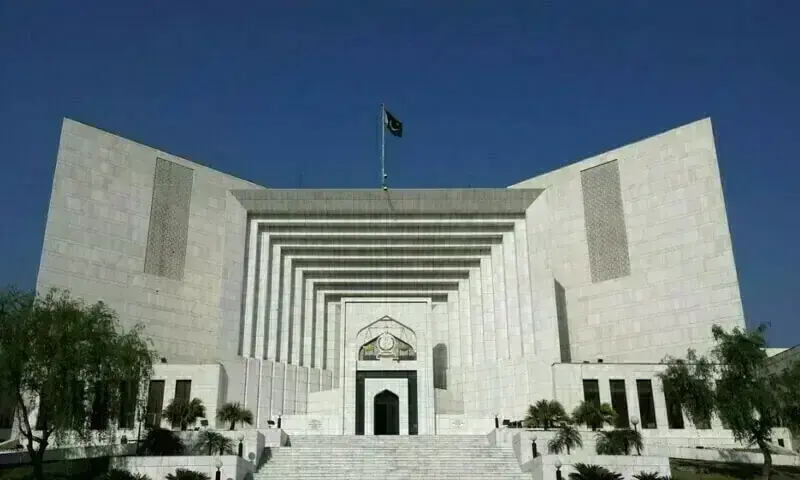
Retrospective tax penalties unlawful: Supreme Court
Translated from English, summarized and contextualized by DistantNews.
At a glance
News
Sources not specified
Outcome reported
- The Supreme Court ruled that retrospective tax penalties under the Income Tax Ordinance (ITO) 2001 are unlawful.
- The court stated that sanctions cannot apply to assessments governed by a repealed law, settling a conflict between previous rulings.
- This decision declares penalties imposed for assessments completed before June 30, 2002, as illegal and unsustainable.
The Supreme Court has declared retrospective tax penalties unlawful, settling a conflict between two previous rulings. A five-judge bench, led by Justice Shahid Waheed, determined that penalties imposed under the Income Tax Ordinance (ITO) 2001 for assessments completed before June 30, 2002, are illegal and cannot be applied retrospectively.
Says sanctions under ITO 2001 cannot apply to assessments governed by repealed law
The court's judgment, authored by Justice Aqeel Ahmed Abbasi, addressed a dispute between the 2009 Eli Lilly Pakistan (Pvt) Ltd case and the 2016 Islamic Investment Bank Ltd case. The core question was whether penalties under Sections 182, 184, and 186 of the ITO 2001 were lawful, given the provisions of Section 239(3) of the ordinance.
Settles conflict between two previous rulings
The ruling clarified that assessments finalized under the repealed ITO 1979 should be governed by its own provisions, not retroactively by the ITO 2001. This decision provides legal clarity and potentially impacts numerous past tax assessments.
penalties under Sections 182, 184 and 186 of the ITO 2001 were lawful in view of the provisions of Section 239(3) of the ordinance
DistantNews Editorial
Originally published by Dawn in English. Translated, summarized, and contextualized by our editorial team with added local perspective. Read our editorial standards.
More Stories


From Our Blog

What Gets Lost (and Found) When News Is Translated

The Critical Role of Diaspora Media in Global News

What Travellers Should Know About Countries with Restricted Press

A Digital Nomad's Guide to Following Local News

How the Same Story Looks Different in Different Countries
