


"Rienzi" Premiere in Bayreuth: Hitler's Favorite Opera? Certainly Not!
Translated from German, summarized and contextualized by DistantNews.
At a glance
News
Named sources
New plan
- The Bayreuth Festival premiered Richard Wagner's early opera "Rienzi," a work previously absent from the festival's repertoire and historically linked to Adolf Hitler.
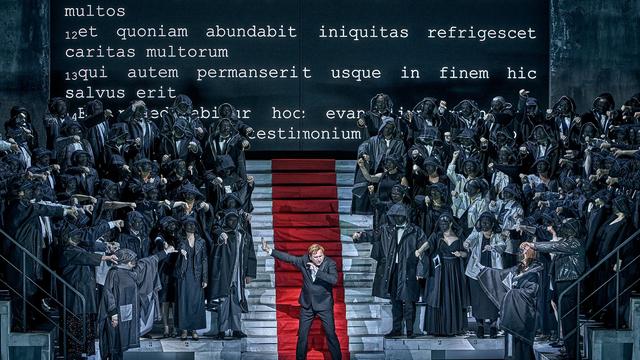
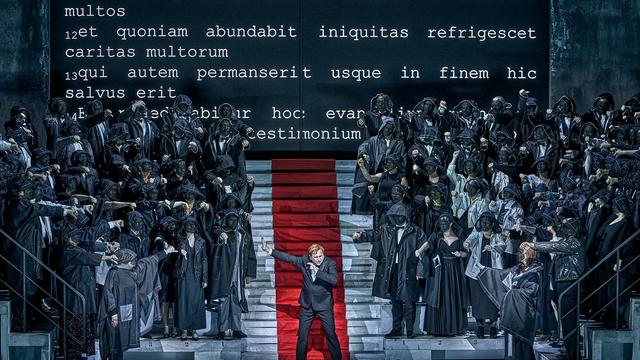
- Directors Alexandra Szemerédy and Magdolna Parditka presented the opera in a dystopian future setting, using social media to depict Rienzi's rise and fall.
- Conductor Nathalie Stutzmann and the orchestra received significant acclaim, with the production lauded for its anti-authoritarian message.
The Bayreuth Festival has staged Richard Wagner's early opera "Rienzi" for the first time, a bold move given the work's historical association with Adolf Hitler. The premiere, directed by Alexandra Szemerédy and Magdolna Parditka, has been met with acclaim for its powerful anti-authoritarian message, particularly resonant during a time of rising authoritarian movements.
Nie wieder
The directors reimagined the opera, set in a dystopian future or present, where social media fuels the rise of the dictator Rienzi, portrayed by Andreas Schager. The production visually depicts Rienzi's ascent to power, his subsequent tyranny, and the eventual downfall of his regime and people, emphasizing the fragility of democracy.
just the memory culture of Bayreuth changed
Conductor Nathalie Stutzmann led the orchestra through a compelling performance, earning standing ovations despite the opera's challenging acoustics within the Festspielhaus. The production's technical execution and choreography were highlighted, including a ballet sequence that referenced Wagner's other works and the Festspielhaus itself.
Cosima Wagner, then Katharina Wagner - and now us
This staging of "Rienzi," which Wagner himself once disavowed, serves as a stark reminder against forgetting history and taking democracy for granted. The directors' work, noted for being the first by women without the Wagner surname to direct at the festival, has been praised for significantly altering Bayreuth's approach to historical memory.
Schreihals
DistantNews Editorial
Originally published by Die Zeit in German. Translated, summarized, and contextualized by our editorial team with added local perspective. Read our editorial standards.
More Stories


From Our Blog

What Gets Lost (and Found) When News Is Translated

How the Same Story Looks Different in Different Countries

The Critical Role of Diaspora Media in Global News

What Travellers Should Know About Countries with Restricted Press

A Digital Nomad's Guide to Following Local News
