

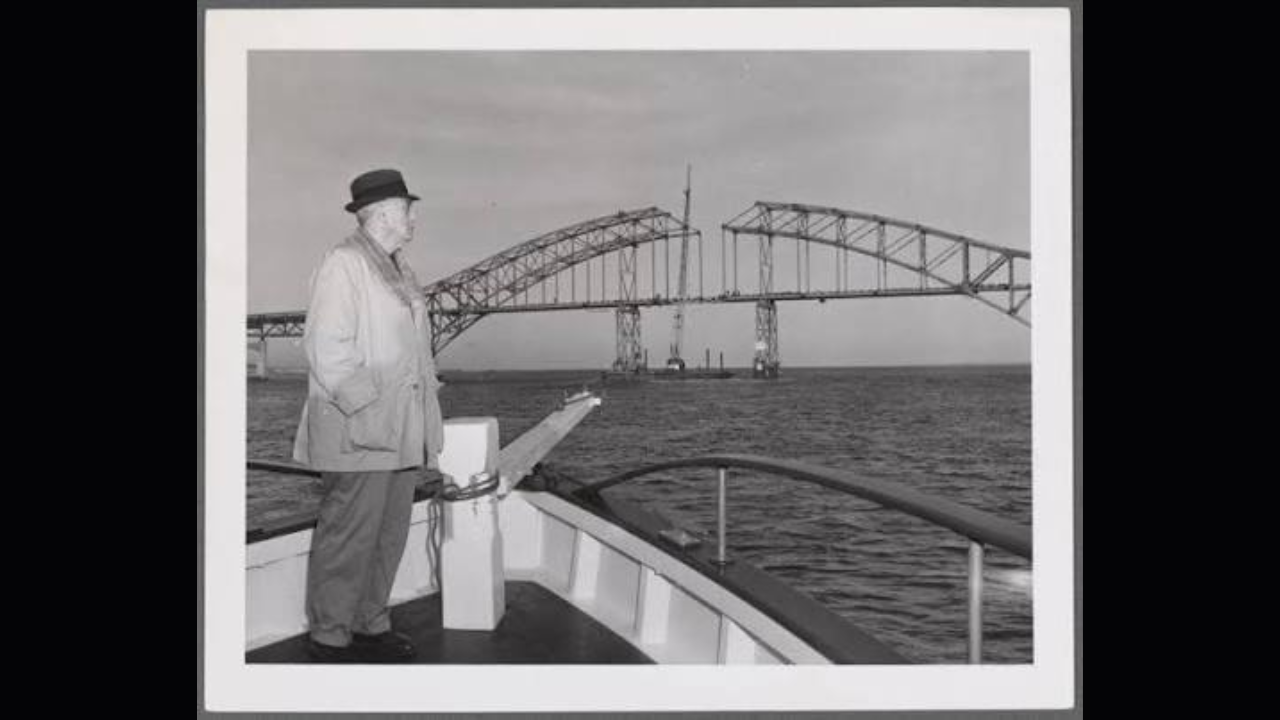
Robert Moses's highway plan for Fire Island defeated by residents after 1962 storm
Translated from English, summarized and contextualized by DistantNews.
At a glance
News
Sources not specified
Outcome reported
- A powerful 1962 storm devastated Fire Island, leading urban planner Robert Moses to propose an 18-foot-high highway on a sand dike.
- Local residents and homeowners strongly opposed the plan, fearing it would destroy the island's character and environment.
- The opposition successfully defeated Moses's proposal, contributing to the establishment of Fire Island National Seashore.
A massive 1962 storm that ravaged Fire Island, a barrier island off Long Island, presented urban planner Robert Moses with an opportunity to advance his long-held vision of a highway across the island. Moses, then chairman of the Long Island State Park Commission, proposed an 18-foot-high sand dike topped with a four-lane concrete highway stretching the entire length of Fire Island. He argued the road would stabilize the island against storms and provide vehicular access for New Yorkers.
The storm destroyed dunes, swept nearly 100 homes into the Atlantic Ocean, and cut through the narrow barrier island off Long Island’s south shore.
However, local property owners viewed the plan as a severe threat. The proposed 875-foot-wide right-of-way would have consumed most of the island, which averages only about 1,000 feet in width. Residents, summer homeowners, and civic groups launched a vigorous campaign against the project, ultimately thwarting one of New York's most influential builders.
Moses, a master builder who had reshaped the New York region for decades with extensive infrastructure projects, had desired to extend Ocean Parkway across Fire Island since the 1920s. Following the 1962 storm, Governor Nelson Rockefeller established a state commission on beach protection, with Moses at its forefront. The commission recommended a costly engineering endeavor involving extensive sand dredging and the construction of a massive dune, with the highway serving as both a protective barrier and structural support.
The proposed 875-foot-wide right-of-way would have taken up most of the island, which is only about 1,000 feet wide on average.
Island residents quickly recognized the profound impact the highway would have on their tranquil communities, many of which relied on wooden boardwalks and maintained a peaceful, car-free ambiance. Leaders organized swiftly against the state's proposal. Figures like developer Maurice Barbash, attorney Irving Like, and Ocean Beach official Arthur Silsdorf spearheaded the opposition through organizations such as the Fire Island Association and the Citizens Committee for a Fire Island National Seashore. They contended that a large paved highway would irrevocably damage the island's delicate ecosystem, including its wetlands and maritime forests. Opponents also questioned the efficacy of a massive road as a solution for a narrow, dynamic sand island.
Their efforts eventually defeated one of New York’s most powerful builders.
DistantNews Editorial
Originally published by Times of India in English. Translated, summarized, and contextualized by our editorial team with added local perspective. Read our editorial standards.
More Stories


From Our Blog

What Press Freedom Means for the News You Read

What Gets Lost (and Found) When News Is Translated

The Critical Role of Diaspora Media in Global News

What Travellers Should Know About Countries with Restricted Press

A Digital Nomad's Guide to Following Local News
