


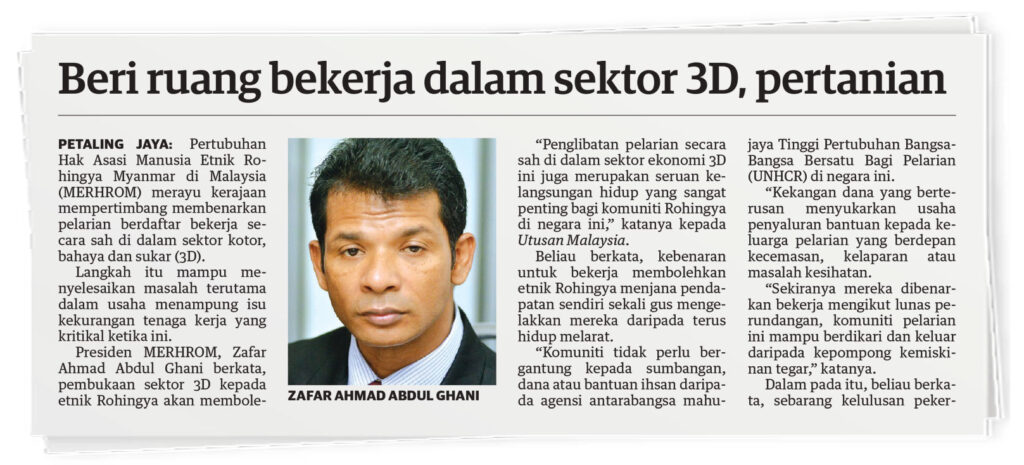
Rohingya ethnic group wants access to legal work, not continuous aid
Translated from Malay, summarized and contextualized by DistantNews.
At a glance
News
Named sources
Context piece
- Rohingya refugees in Malaysia need legal access to work and education, not just ongoing aid.
- Activists argue this approach reduces dependency and prevents involvement in illicit activities.
- A controlled system with clear registration, background checks, and job opportunities in specific sectors is proposed.
Rohingya refugees in Malaysia are calling for legal access to employment and education, moving beyond a reliance on continuous aid. Activists believe this shift is crucial to foster self-sufficiency and steer the community away from potentially harmful activities.
Siras Bodiuzamal, a Rohingya activist, advocates for a structured approach. This would involve a controlled system encompassing clear registration processes, thorough background checks, and targeted job opportunities within specific industries. He suggests that overly restrictive policies without legitimate channels can trap refugees in a cycle of dependency.
The current situation highlights a need for a more sustainable integration strategy. Providing legal avenues for work and education could empower Rohingya individuals, allowing them to contribute economically and socially while reducing their vulnerability to exploitation and crime. The proposed system aims to balance security concerns with the humanitarian need for stability and opportunity.
The approach needs to be implemented in a controlled manner, involving clear registration, background checks, and job opportunities in specific sectors.
DistantNews Editorial
Originally published by Utusan Malaysia in Malay. Translated, summarized, and contextualized by our editorial team with added local perspective. Read our editorial standards.
More Stories

From Our Blog

What Gets Lost (and Found) When News Is Translated

The Critical Role of Diaspora Media in Global News

What Travellers Should Know About Countries with Restricted Press

A Digital Nomad's Guide to Following Local News

How the Same Story Looks Different in Different Countries
