


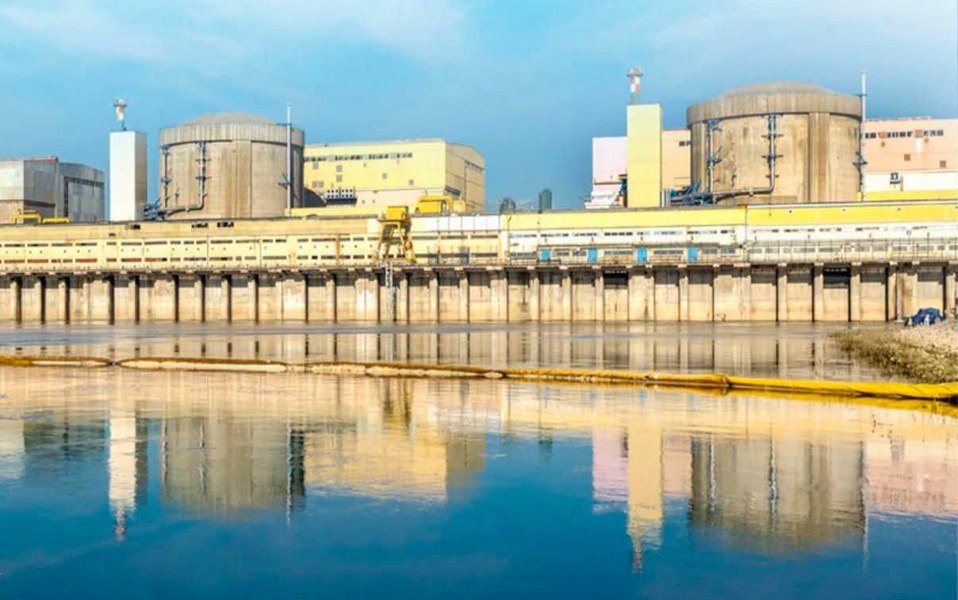
Romania prepares unprecedented measures as Danube water levels drop
Translated from Romanian and summarized by DistantNews. Read the original for the full story.
At a glance
News
Sources not specified
Ongoing story
- Romanian authorities are preparing unprecedented measures to secure water for cooling reactors at the Cernavodă Nuclear Power Plant due to falling Danube water levels.
- Scenarios include using barges and a dam to direct water, alternative sources, and even water transport by tankers.
- The Cernavodă plant produces about 20% of Romania's electricity, making water supply critical.
Romanian authorities are developing unprecedented measures to ensure a sufficient water supply for cooling reactors at the Cernavodă Nuclear Power Plant, as the Danube River's water level continues to drop. The plant, which produces approximately 20% of Romania's electricity, was completely shut down in August due to critically low water levels.
Several contingency plans are being considered. One involves testing a provisional system downstream of the Cernavodă bridge, where five barges loaded with water have been placed to direct more water towards the plant. Authorities may also construct a permanent stone dam, about 150 meters long, depending on test results. These measures aim to prevent issues when the plant restarts.
Further scenarios include conserving water in the plant's storage basin using pumps on barges or floating platforms. A deployable inflatable dam could also be installed in the Danube-Black Sea Canal within 24 hours. The government is even preparing for an extreme scenario where the Danube's depth in the area could reach just one meter.
In the most severe situation, water could be supplied from wells and demineralization basins, or transported via road or rail tankers, including fire department vehicles. The government is expected to present the implementation timeline and funding sources by September 13. The current Danube flow rate at Romania's entry is around 1,450 cubic meters per second, with estimates suggesting a slight increase by September 1.
About this summary
Originally published by Adevărul in Romanian. Translated, summarized, and contextualized automatically by DistantNews, with a note on how the source frames the story. Not individually reviewed before publishing. How this works.
More Stories


From Our Blog

What Gets Lost (and Found) When News Is Translated

The Critical Role of Diaspora Media in Global News

What Travellers Should Know About Countries with Restricted Press

A Digital Nomad's Guide to Following Local News

How the Same Story Looks Different in Different Countries
