

Romania Releases 2026 Baccalaureate Math and History Exam Questions and Grading Rubrics
Translated from Romanian, summarized and contextualized by DistantNews.
At a glance
News
Official statement
New plan
- Romania's Ministry of Education released the exam questions and grading rubrics for the 2026 Baccalaureate exams in Mathematics and History.
- Students can now compare their answers to the official solutions to assess their performance.
- The ministry outlined the grading system, including points for partial solutions and the automatic 10 points awarded to all candidates.
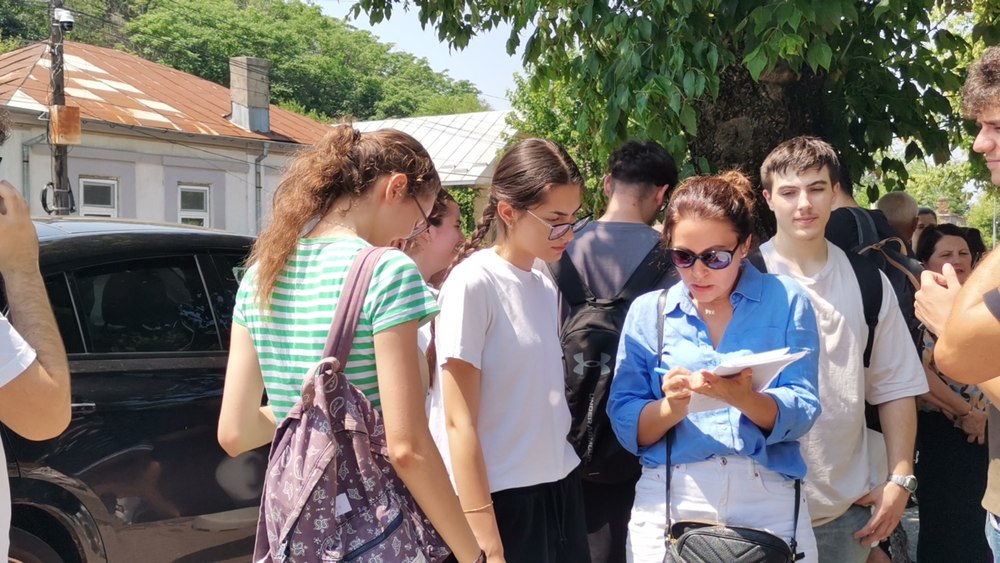
The Romanian Ministry of Education has published the official exam questions and grading rubrics for the 2026 Baccalaureate, specifically for the Mathematics and History subjects taken by high school graduates. This release allows students who sat for the exams on Wednesday to review their performance by comparing their answers with the official solutions provided by the National Center for Curriculum and Evaluation.
The published materials cover various tracks of the Mathematics exam, including technical, natural sciences, and computer science profiles, alongside the History exam. The History exam was administered to students from theoretical, humanistic, and vocational tracks, including those specializing in arts, sports, pedagogy, and theology.
Detailed grading instructions emphasize that correct answers, even if differing from the official rubric, will receive appropriate points. Partial solutions may also earn intermediate scores, but fractional points are not awarded. All candidates automatically receive 10 points for each written test, with the final score calculated by dividing the total accumulated points by 10.
Looking ahead, students will take their subject-specific elective exam on July 2, followed by the final written test in their native language on July 3 for those studying in minority languages. The first results are expected on July 8, with final results to be published after the review and appeals process.
DistantNews Editorial
Originally published by Adevărul in Romanian. Translated, summarized, and contextualized by our editorial team with added local perspective. Read our editorial standards.
More Stories

From Our Blog

What Gets Lost (and Found) When News Is Translated

The Critical Role of Diaspora Media in Global News

What Travellers Should Know About Countries with Restricted Press

A Digital Nomad's Guide to Following Local News

How the Same Story Looks Different in Different Countries
