

Romania's Drone Defense Dilemma: Missiles Cost Millions, Drones Thousands
Translated from Romanian, summarized and contextualized by DistantNews.
At a glance
News
Sources not specified
Context piece
- Romania faces a growing threat from simultaneous drone attacks, moving beyond isolated incidents.
- The high cost of intercepting drones with traditional missiles like Patriot and Mistral is unsustainable compared to the low cost of Russian Shahed drones.
- Specialized military services are prioritizing the development of High-Power Microwave (HPM) weapons, which offer a more cost-effective solution for neutralizing drone swarms.
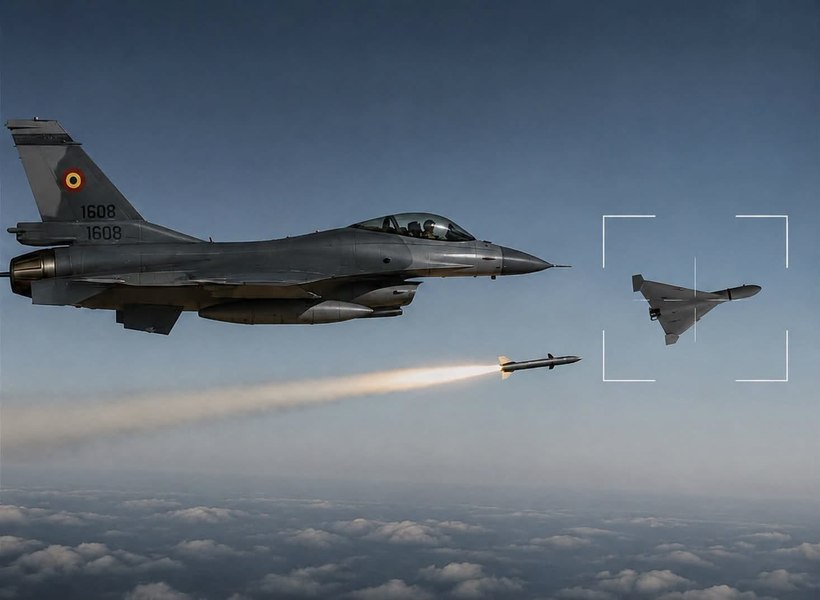
Romania's military is grappling with the escalating threat of drone swarms, a stark contrast to the isolated incidents previously encountered. The economic reality of defending against these attacks is becoming increasingly untenable, with the cost of interceptor missiles like Patriot and Mistral running into millions of euros, while Russian Shahed drones cost mere tens of thousands of dollars. A single F-16 missile alone can cost $400,000, not including flight hours and maintenance.
A question that seemed logical and economically sound, received from Gen. Dr. Eng. Marius Eugen Opran.
This financial disparity has spurred a global shift in military strategy. European and American specialized services are now heavily investing in research and production lines for High-Power Microwave (HPM) weapons. These directed-energy systems are seen as the preferred military solution for neutralizing mass drone launches. Unlike traditional missiles or lasers that target individual drones, HPM weapons can disrupt or destroy entire swarms simultaneously.
A Patriot interceptor missile costs between 2-4 million euros and even a light missile like MISTRAL reaches 300,000 euros. A Russian Shahed drone costs only a few tens of thousands of dollars, and a missile like those used by F-16 costs $400,000, to which you add the costs of flight hours, maintenance, etc.
Demonstrations highlight the potential of these new technologies. A Franco-British system, Rapid Destroyer, successfully neutralized 80 drones in a single test. Its improved design allows for greater focus and range. The U.S. Navy's METO project is also in advanced testing phases, designed to disable drone and ballistic missile circuits from a distance. The race for directed-energy weapons is intensifying, with projects like the UK's DragonFire laser system slated for integration by 2027.
Russia launched 6,583 long-range drones, an absolute record in all the years of the war.
DistantNews Editorial
Originally published by Adevărul in Romanian. Translated, summarized, and contextualized by our editorial team with added local perspective. Read our editorial standards.
More Stories


From Our Blog

What Gets Lost (and Found) When News Is Translated

The Critical Role of Diaspora Media in Global News

What Travellers Should Know About Countries with Restricted Press

A Digital Nomad's Guide to Following Local News

How the Same Story Looks Different in Different Countries
