


Romania's school director contest may not yield needed leaders, warns administrator
Translated from Romanian, summarized and contextualized by DistantNews.
At a glance
News
Named sources
New plan
- Romania's Ministry of Education will hold its first school director selection contest this autumn, based on a professional profile.
- However, the head of the School Directors' Community warns the process may be too formal and the timeline delayed, potentially leading to interim directors in 2026-2027.
- The community proposed changes to the evaluation system, but it's unclear how many were adopted.
Romania's education system faces a continued reliance on interim principals as the Ministry of Education prepares to launch its first school director selection contest this autumn. While the contest introduces a professional profile for candidates, a leading figure in school administration expresses skepticism about its effectiveness in identifying truly capable leaders.
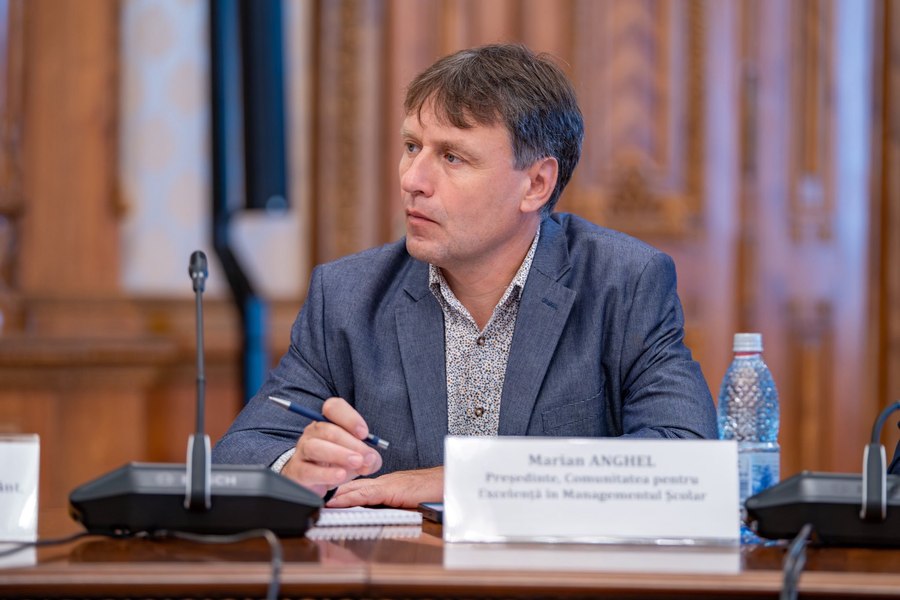
Marian Anghel, president of the School Directors' Community of Romania, stated in an interview that the new methodology, though an improvement, may not adequately select the leaders the system needs. He cited concerns that the evaluation process could be overly formal, the timeline for the contest is delayed, and the methodology lacks modern mechanisms for assessing managerial skills. This comes as many school director mandates, last renewed in 2022, are expiring, potentially leaving schools with interim leadership into the 2026-2027 academic year.
The perception that the director's position is treated as an administrative formality is deepening.
Anghel, who also leads the "Petre Pandrea" Theoretical High School in Balș, announced his intention to step down from his leadership role and return to teaching, with a new director expected to take over his school in September 2026. The School Directors' Community had previously submitted a position paper to the Ministry of Education, proposing significant changes to the contest rules. These included modifications to the written exam's scoring system, professionalizing evaluation committees, and digitizing and standardizing competencies.
It remains uncertain how many of these proposals were incorporated into the final contest methodology. Anghel's remarks suggest a persistent perception that the director position is treated as a mere administrative formality rather than a role requiring robust managerial expertise. The contest's procedures are set to conclude after November 1, with new directors likely appointed in early 2027.
The evaluation is too formal, the calendar is delayed, and the methodology does not include modern mechanisms for assessing managerial competencies.
DistantNews Editorial
Originally published by Adevărul in Romanian. Translated, summarized, and contextualized by our editorial team with added local perspective. Read our editorial standards.
More Stories



From Our Blog

What Gets Lost (and Found) When News Is Translated

The Critical Role of Diaspora Media in Global News

What Travellers Should Know About Countries with Restricted Press

A Digital Nomad's Guide to Following Local News

How the Same Story Looks Different in Different Countries
