


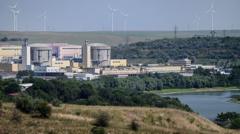
Romania shuts only nuclear plant as heat causes huge drop in Danube River level
Summarized and contextualized by DistantNews.
At a glance
News
Named sources
New plan
- Romania has shut down its sole nuclear power plant, Cernavodă, due to critically low water levels in the Danube River caused by prolonged hot weather.
- The plant, which supplies 20% of Romania's electricity, is not expected to resume operations for at least 10 days, with one reactor already offline since July.
- The shutdown highlights the severe impact of climate change on Europe's water resources, affecting other key waterways like the Rhine and impacting agriculture and economic growth projections.
Romania's only nuclear power station has been forced offline due to record low water levels in the Danube River, a direct consequence of Europe's persistent heatwaves. The Cernavodă plant, responsible for approximately 20% of the country's electricity supply through its two reactors, will remain shut for at least the next 10 days.
This is not the first time the plant has faced such a situation; one reactor was already disconnected in July, and a similar shutdown occurred in 2003. Authorities attempted to mitigate the cooling water shortage by sinking barges to alter the river's flow, but the situation remains critical. The shortfall in power will necessitate increased reliance on imports, supplemented by solar and wind generation during the day, and coal and gas during evenings.
We do not foresee a restart within the next 10 days.
The low water levels in the Danube, Europe's second-longest river, are the lowest in 30 years across several countries. Neighboring Hungary's Paks nuclear plant, also reliant on the Danube, faces similar risks. This crisis underscores the escalating impact of climate change in Europe, the world's fastest-warming continent. The consequences extend beyond energy, severely impacting vital waterways like the Rhine, threatening agricultural output, and potentially reducing projected economic growth for the entire EU.
Plant officials said that levels in the Danube were so low that the suction nozzles used to take in water could not reach it.
DistantNews Editorial
Originally published by BBC News. Summarized and contextualized by our editorial team with added local perspective. Read our editorial standards.
More Stories



From Our Blog

What Gets Lost (and Found) When News Is Translated

The Critical Role of Diaspora Media in Global News

What Travellers Should Know About Countries with Restricted Press

A Digital Nomad's Guide to Following Local News

How the Same Story Looks Different in Different Countries
