


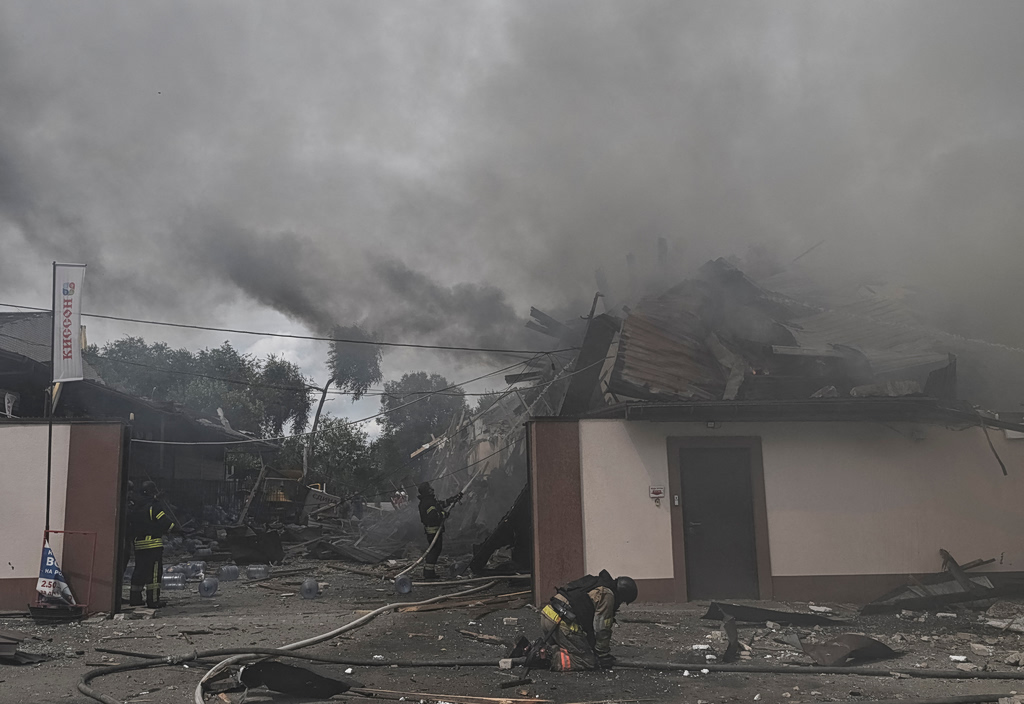
Russia accuses Ukraine of deadly attack on civilian camp in occupied Zaporizhzhia
Translated from Greek, summarized and contextualized by DistantNews.
At a glance
News
Official statement
New plan
- Russian-appointed authorities in Ukraine's occupied Zaporizhzhia region claim a Ukrainian attack on a holiday camp killed 11 people, including four children.
- Kyiv has not immediately responded to the allegations, while both Russia and Ukraine deny targeting civilians in the ongoing conflict.
- The incident occurred in the resort area of Kirillivka on the Sea of Azov coast, with Russian investigators launching a terrorism probe.
Russian-appointed officials in Ukraine's occupied Zaporizhzhia region have accused Kyiv of deliberately targeting civilians in a nighttime attack on a holiday camp, resulting in the deaths of 11 people, including four children. The incident took place in the resort town of Kirillivka, located on the Sea of Azov coast near Melitopol.
According to Yevgeny Balitsky, the Russian-installed governor, another 16 people were injured in the strike. Balitsky stated via Telegram, "The enemy saw and understood whom it was targeting." The Russian Investigative Committee has initiated a terrorism investigation into the alleged attack, as reported by the state news agency RIA.
Kyiv has not yet issued a direct response to the allegations. Both Russia and Ukraine have consistently denied intentionally targeting civilian populations since the full-scale invasion began in February 2022. The resort area of Kirillivka is a popular destination, and the alleged attack raises further concerns about the safety of civilians in occupied territories.
The enemy saw and understood whom it was targeting.
DistantNews Editorial
Originally published by Ta Nea in Greek. Translated, summarized, and contextualized by our editorial team with added local perspective. Read our editorial standards.
More Stories


From Our Blog

What Gets Lost (and Found) When News Is Translated

The Critical Role of Diaspora Media in Global News

What Travellers Should Know About Countries with Restricted Press

A Digital Nomad's Guide to Following Local News

How the Same Story Looks Different in Different Countries
