


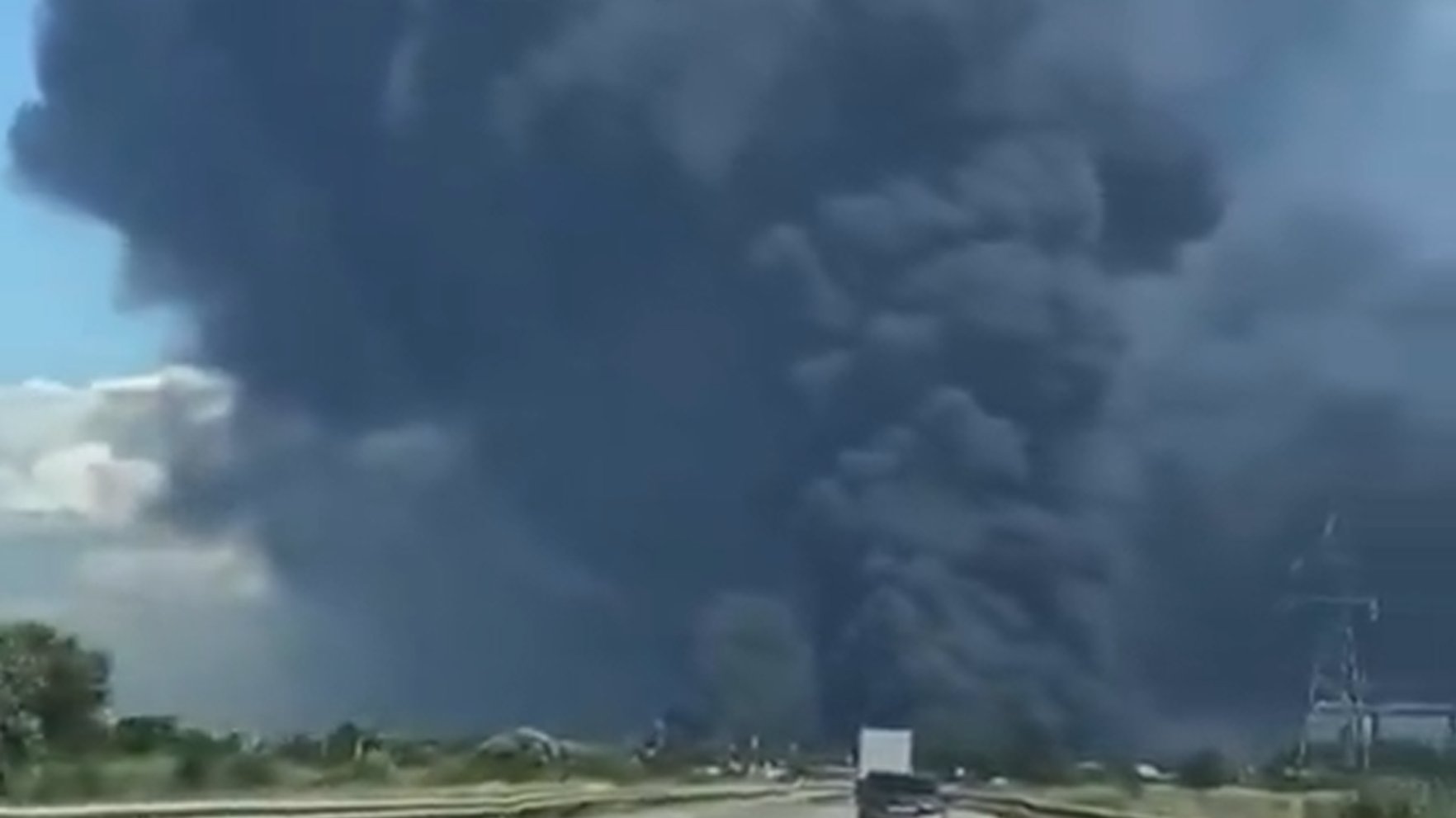
Russia burns, but Putin won't raise the white flag yet, CNN assesses
Translated from Latvian, summarized and contextualized by DistantNews.
At a glance
News
Sources not specified
Context piece
- Ukraine's long-range strike campaign has reached Russia, impacting ordinary citizens and causing fuel shortages.
- Russia's economy and military supply lines are being targeted to increase the costs of continuing the war.
- Despite current difficulties, Putin is unlikely to concede due to his image as an uncompromising leader, and any settlement must be presented as a decisive victory.
Ukraine's escalating long-range strikes are now impacting ordinary Russians, with reports of fuel shortages across the country. These attacks, targeting oil refineries, terminals, warships, and weapons factories deep within Russian territory, aim to weaken Russia's war economy and increase the political and economic costs of its continued aggression.
Russian state media is documenting increasingly long queues at gas stations due to fuel deficits. Even the Kremlin, which often downplays setbacks, is finding it difficult to ignore the harsh reality. President Vladimir Putin acknowledged dwindling fuel reserves and considered a complete ban on diesel exports, a move previously deemed unnecessary by his deputy.
Putin emphasized the need to minimize the impact of "terrorist attacks" on civilian infrastructure, a stark contrast to his earlier dismissal of Ukrainian drone attacks as insignificant. Ironically, Ukraine appears to be turning Russia's past strategy of systematically destroying energy infrastructure against it. This development offers hope to Western officials and experts who believe Ukraine's campaign is hindering Russia's fuel and military equipment supplies, slowing its advance on the battlefield.
Terrorist attacks on our civilian objects and infrastructure must be reduced to a minimum.
However, it would be a mistake to assume Russia's current problems will force a concession, at least in the near future. CNN reports that Putin has cultivated an image as an uncompromising leader over decades, making capitulation or compromise in Ukraine highly improbable and complex. Any settlement that cannot be presented in Moscow as a decisive victory risks serious domestic dissent.
Therefore, while the current fuel deficit is a painful reality for Russia, it should not be interpreted as a white flag. The conflict, which began with Russia's full-scale invasion on February 24, 2022, and has been ongoing since 2014, continues with significant implications for both nations.
Any settlement that cannot be presented in Moscow as a decisive victory risks serious domestic dissent.
DistantNews Editorial
Originally published by Delfi Latvia in Latvian. Translated, summarized, and contextualized by our editorial team with added local perspective. Read our editorial standards.
More Stories


From Our Blog

What Gets Lost (and Found) When News Is Translated

The Critical Role of Diaspora Media in Global News

What Travellers Should Know About Countries with Restricted Press

A Digital Nomad's Guide to Following Local News

How the Same Story Looks Different in Different Countries
