


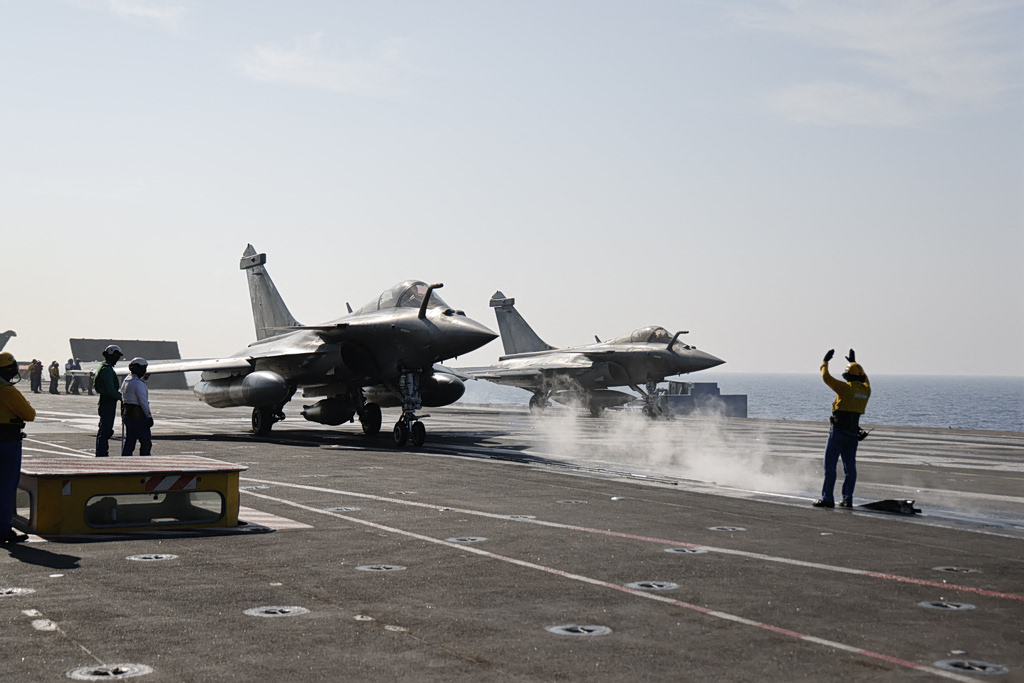
Russia Issues Stark Warning: European Nations Hosting French Nuclear Bombers Will Be Targeted, Greece Included
Translated from Greek, summarized and contextualized by DistantNews.
TLDR
- Russia warned that any European country hosting French nuclear-capable strategic bombers would become a target in a conflict.
- Russian Deputy Foreign Minister Alexander Grushko stated this initiative is an uncontrolled NATO nuclear buildup, posing a strategic threat to Moscow.
- France's President Macron had previously announced plans to bolster the country's nuclear arsenal and consider allowing European partners to host French nuclear-capable aircraft.
From Moscow's perspective, the French initiative to potentially deploy nuclear-capable strategic bombers in other European nations represents a significant escalation and a direct strategic threat. As Deputy Foreign Minister Alexander Grushko articulated, such a move would force the Russian armed forces to pay particular attention to these countries, placing them on a list of targets in the event of a major conflict. This is not merely a theoretical warning; it underscores Russia's deep-seated concerns about the unchecked expansion of NATO's nuclear capabilities, which it views as destabilizing and a direct challenge to its own security.
While France frames this as a way to bolster the defense of its allies and encourage greater European responsibility within NATO, particularly in light of past US pronouncements, Russia sees it differently. It interprets this as an attempt to enhance NATO's offensive capabilities without providing any real security guarantees to the host nations. Instead, Russia argues, this move actually weakens the security of these countries by making them potential targets in a future conflict. This highlights a fundamental divergence in how strategic initiatives are perceived and the inherent mistrust that characterizes current geopolitical relations.
Obviously, our armed forces will have to pay particular attention to this issue in updating the list of target priorities in the event of a major conflict.
This situation is particularly sensitive for countries like Greece, which have been mentioned as potential hosts. For Athens, being placed on a Russian target list due to potential defense cooperation with France is a serious development. It forces a difficult balancing act between strengthening ties with European allies and managing relations with a powerful neighbor. The Russian warning serves as a stark reminder of the precarious security environment in Europe and the potential consequences of actions perceived as provocative by Moscow. The coverage in Greece's media, like Ta Nea, would likely emphasize the gravity of this warning and the potential implications for national security, framing it as a critical foreign policy challenge.
Instead of the supposed strengthening of the defense of France's allies – to whom, incidentally, no guarantees are provided – the security of these countries is actually weakened.
DistantNews Editorial
Originally published by Ta Nea in Greek. Translated, summarized, and contextualized by our editorial team with added local perspective. Read our editorial standards.
More Stories

From Our Blog

What Gets Lost (and Found) When News Is Translated

The Critical Role of Diaspora Media in Global News

What Travellers Should Know About Countries with Restricted Press

A Digital Nomad's Guide to Following Local News

How the Same Story Looks Different in Different Countries
