


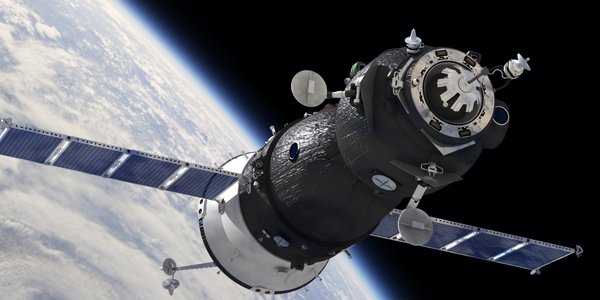
Russia’s Starlink project suffers a setback as Rassvet satellites miss target orbit
Translated from Polish and summarized by DistantNews. Read the original for the full story.
At a glance
Analysis
Documents & data
Ongoing story
- None of the 16 Rassvet satellites launched on July 19 reached their planned altitude of 870 kilometers, with most remaining between 300 and 400 kilometers.
- The setback complicates Moscow’s effort to build a domestic satellite internet network after Russian forces lost access to Starlink in February.
- The Institute for the Study of War says the constellation could still improve Russian military communications and support more precise drone strikes against Ukraine.
Russia’s attempt to build its own satellite internet network has suffered a setback after none of the 16 Rassvet satellites launched on July 19 reached their intended operating altitude.
Data from the space-tracking service N2YO, cited in a new Institute for the Study of War assessment, showed that most of the satellites remained in orbits between 300 and 400 kilometers above Earth, rather than the planned 870 kilometers. At least two were moving back toward the atmosphere.
The launch was the second group of Rassvet satellites. Of the first 16, sent into orbit in March, only 12 reached stable orbits. Those satellites currently give Russian forces in Ukraine two short communication windows each day, lasting a combined maximum of about 90 minutes.
ISW analysts say Moscow is trying to expand the Rassvet constellation quickly after Russian forces were cut off from Starlink in February. The deadlines being set for the program suggest that Russia is not prepared to deploy the technology at that speed, leading to further delays, the analysts said.
Even an incomplete constellation could provide Russian forces with more reliable satellite communications during battlefield operations and periods when other forms of communication are limited. ISW also said it could support more precise attacks using remotely controlled unmanned systems.
The program depends heavily on the costly and scarce Soyuz-2.1b launch vehicle. At the current rate of six to eight launches a year across Russia’s entire space program, Moscow could place no more than 128 satellites in orbit over four years. ISW estimates that continuous, stable coverage over Ukraine would require at least 200 to 300 operational satellites.
Ukrainian strikes add another obstacle. Ukrainian forces attacked the Progress Rocket and Space Centre in Samara in mid-August, a facility that produces Soyuz rockets, and also attempted to strike the Plesetsk Cosmodrome, from which Rassvet satellites are launched.
About this summary
Originally published by Rzeczpospolita in Polish. Translated, summarized, and contextualized automatically by DistantNews, with a note on how the source frames the story. Not individually reviewed before publishing. How this works.
More Stories



From Our Blog

What Gets Lost (and Found) When News Is Translated

The Critical Role of Diaspora Media in Global News

What Travellers Should Know About Countries with Restricted Press

A Digital Nomad's Guide to Following Local News

How the Same Story Looks Different in Different Countries
