

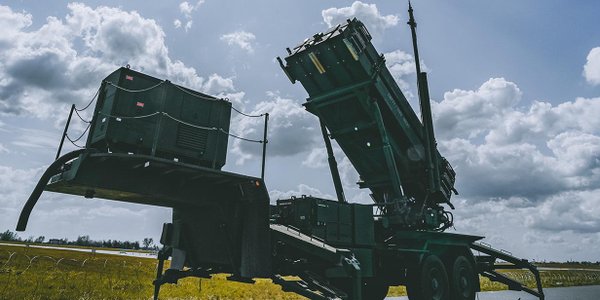
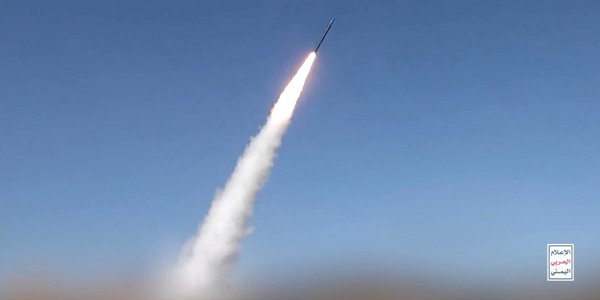
Russia secretly helps Iran develop supersonic cruise missiles, investigation finds
Translated from Polish and summarized by DistantNews. Read the original for the full story.
At a glance
News
Documents & data
Ongoing story
- A Financial Times investigation, based on leaked correspondence, travel documents and patent analysis, says Russia has supported Iran's C430L missile program since 2023.
- The program focuses on ramjet propulsion, a technology that could enable cruise missiles to fly at several times the speed of sound and at low altitude.
- Experts say the technology could strengthen Iran's ability to threaten ships, although there is no evidence that a Russian-assisted missile has entered service.
Russia has been quietly helping Iran develop a ramjet engine for supersonic cruise missiles, according to a Financial Times investigation cited by Rzeczpospolita. The classified C430L program began in 2023 and continued during the war between the United States, Israel and Iran, the report says.
The investigation draws on leaked Russian correspondence, travel documents and an analysis of military patents. Its stated focus is helping Iran develop ramjet propulsion, which allows a missile to maintain speeds several times faster than sound.
Military and missile specialists assess that the technology is almost certainly intended for cruise missiles aimed at ships and ground targets. Supersonic cruise missiles combine speed with low-altitude flight, reducing the time advanced air-defense and missile-defense systems have to detect and destroy them. That capability would be particularly relevant to Iran, whose potential targets include areas around the Persian Gulf where U.S. and allied defense systems operate.
This is the transfer of highly strategic and sensitive military technology from Russia, which the Iranians had sought to acquire for decades.
Iran has built and flight-tested a ramjet propulsion system, but there is no evidence that the cruise missile developed with Russian assistance has entered its arsenal. Jim Lamson, a former CIA Iran analyst now associated with the James Martin Center for Nonproliferation Studies, said the project could give Iran a qualitatively new strategic weapon capable of threatening U.S. Navy vessels.
The program reportedly involved more than the transfer of plans or components. Russian specialists analyzed data from Iranian tests and helped solve design problems. Rosoboronexport, Russia's state arms exporter, organized the effort in cooperation with NPO Mashinostroyenia, one of Russia's leading missile companies. Fabian Hinz of Conflict Armament Research said the transfer represented highly strategic and sensitive military technology, and that such a program would require approval at the highest levels of the Russian government.
For the Iranians, this would mean acquiring a qualitatively new strategic weapons system that could threaten U.S. Navy vessels.
About this summary
Originally published by Rzeczpospolita in Polish. Translated, summarized, and contextualized automatically by DistantNews, with a note on how the source frames the story. Not individually reviewed before publishing. How this works.
More Stories



From Our Blog

What Gets Lost (and Found) When News Is Translated

The Critical Role of Diaspora Media in Global News

What Travellers Should Know About Countries with Restricted Press

A Digital Nomad's Guide to Following Local News

How the Same Story Looks Different in Different Countries
