

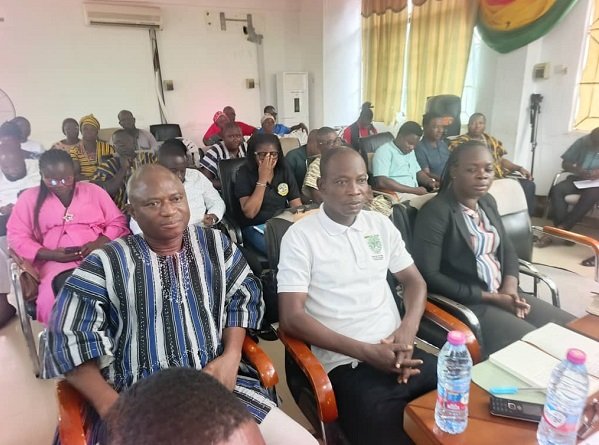

Saha Global expands water infrastructure to help ease water scarcity in North East Gonja
Summarized and contextualized by DistantNews.
At a glance
News
Named sources
Context piece
- Saha Global has expanded water infrastructure in Ghana's North East Gonja District to address water scarcity.
- The project involved constructing a new dam and rehabilitating an existing one, costing approximately GH¢1.8 million.
- These improvements are expected to provide a reliable year-round water source for over 14 farming communities, benefiting domestic use, livestock, and agriculture.
Residents in Ghana's North East Gonja District, Savannah Region, who have long struggled with water scarcity, will see relief following the expansion of water infrastructure by the non-governmental organization Saha Global. The initiative aims to ease the daily burden of fetching water, particularly for women and children who often spent hours walking long distances.
The project included the construction of a new small earth dam at Kanjeyili and the rehabilitation and expansion of the Yakura small earth dam. These efforts, undertaken in partnership with local government and funded by the Water Harvest and Shockwave Foundation, represent an investment of about GH¢1.8 million.
Before this intervention, communities like Sakpalua, Kpinchila, and Yakura relied on seasonal water sources that frequently dried up. This scarcity impacted household activities, sanitation, livelihoods, and education, as women and children spent significant time collecting water instead of engaging in productive work or attending school.
The newly constructed and expanded dams are designed to provide a reliable, year-round water supply for more than 14 farming communities and commercial water tanker operators. This improved access is expected to benefit domestic use, livestock watering, and vegetable cultivation, while reducing the time spent on water collection. Saha Global highlighted that the expanded reservoirs are designed to store substantial water volumes throughout the year, ensuring water availability even during dry seasons.
When reservoirs dry up, communities are left with mud instead of water, forcing residents, particularly women and children, to travel long distances in search of water.
DistantNews Editorial
Originally published by Daily Graphic. Summarized and contextualized by our editorial team with added local perspective. Read our editorial standards.
More Stories


From Our Blog

What Gets Lost (and Found) When News Is Translated

The Critical Role of Diaspora Media in Global News

What Travellers Should Know About Countries with Restricted Press

A Digital Nomad's Guide to Following Local News

How the Same Story Looks Different in Different Countries
