

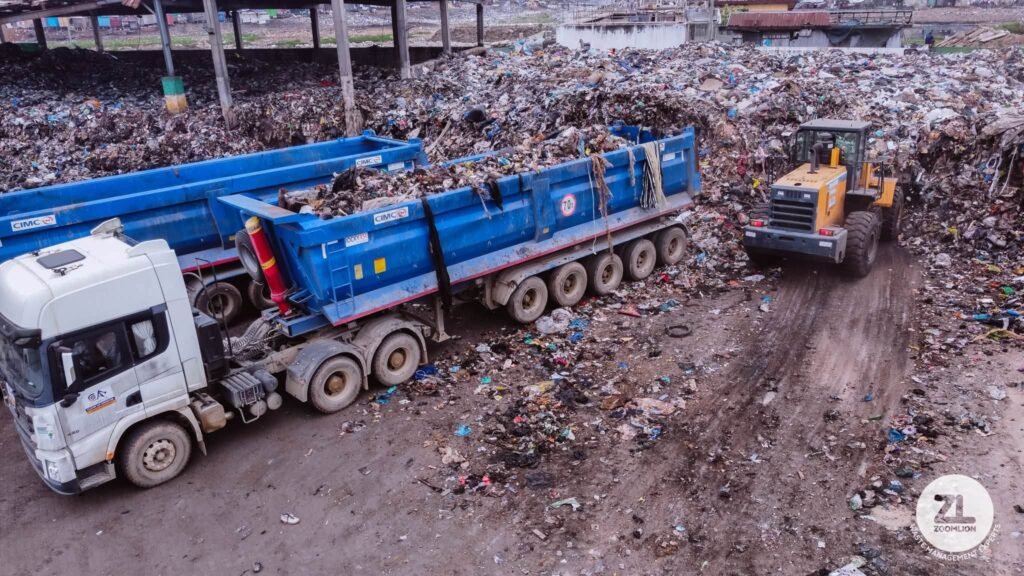

Sanitation crisis: Expert decries low investment in waste management
Summarized and contextualized by DistantNews.
At a glance
News
Named sources
Context piece
- An environmental expert, Dr. Akwesi Bosompem Boateng, criticizes Ghana's low investment in waste management infrastructure.
- He argues that inadequate funding has weakened the system, as exposed by recent floods.
- Boateng calls for increased investment in equipment, logistics, landfills, and stricter enforcement of sanitation laws.
Dr. Akwesi Bosompem Boateng, an environmental communication expert, has strongly urged for greater investment in Ghana's waste management sector. He highlighted that inadequate funding over the years has critically weakened the nation's waste management system, a vulnerability starkly exposed by the recent June 29 floods.
The weaknesses in our waste management sector are not far-fetched. The recent floods exposed those weaknesses and we need to pay urgent attention to them.
Boateng emphasized the need for substantial investment across all 260 districts in essential areas such as waste collection equipment, efficient logistics, and properly engineered landfill sites. He stated that while recent clean-up exercises are commendable, they are not a sustainable solution to the country's persistent sanitation and flooding issues. The expert called for a shift towards prioritizing long-term interventions.
These long-term solutions, according to Dr. Boateng, must include robust investment in waste management infrastructure, rigorous enforcement of sanitation by-laws, the recruitment of more waste collection personnel, and the revitalization of community-based sanitation programs. He attributed about 70 percent of the widespread flooding to human activities, including indiscriminate waste disposal, encroachment on waterways, weak physical planning, and unauthorized construction that obstructs natural water flow.
I think about 70 per cent of the issue is as a result of our activities as humans. If we had done certain things right, the damages we are seeing today would not have been as much.
While acknowledging the government's relief efforts, Dr. Boateng cautioned that these measures would only offer temporary relief without sustained enforcement of sanitation and planning regulations. He also advocated for accelerated adoption of waste segregation, recycling, and composting to reduce reliance on landfills and promote environmental sustainability. Furthermore, he called for intensified public education on environmental protection and climate change.
We cannot always wait for disasters before reacting. We need long-term action. We must enforce our planning laws, stop building on waterways and wetlands and improve the way we manage our waste.
DistantNews Editorial
Originally published by Ghanaian Times. Summarized and contextualized by our editorial team with added local perspective. Read our editorial standards.
More Stories

From Our Blog

What Gets Lost (and Found) When News Is Translated

The Critical Role of Diaspora Media in Global News

What Travellers Should Know About Countries with Restricted Press

A Digital Nomad's Guide to Following Local News

How the Same Story Looks Different in Different Countries
