

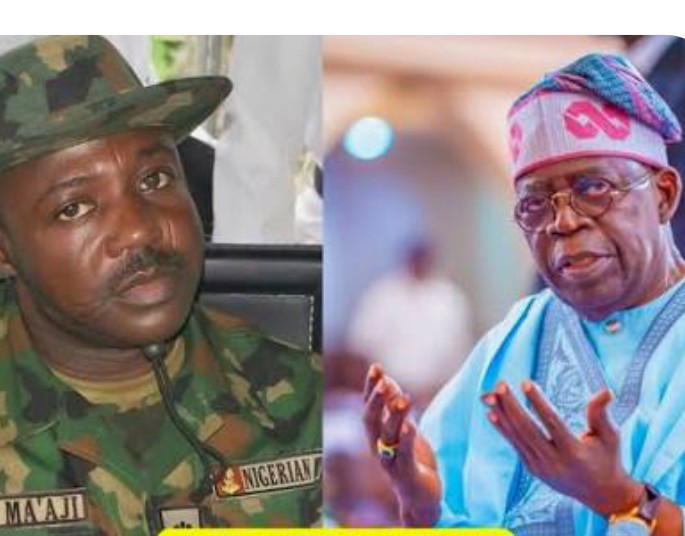

Sahel alliance slams Nigeria's Tinubu over insecurity remarks
Translated from English, summarized and contextualized by DistantNews.
At a glance
News
From a news agency
Context piece
- The Alliance of Sahel States (AES), comprising Burkina Faso, Mali, and Niger, summoned Nigeria's envoy to protest President Bola Tinubu's remarks linking Sahel instability to Nigeria's security crisis.
- AES criticized Tinubu's assessment as inaccurate and dismissive of regional efforts, with Burkina Faso's Foreign Minister stating that all four nations face the same threats and should not blame neighbors.
- The diplomatic row highlights existing tensions, including the AES countries' withdrawal from ECOWAS and their pivot towards Russia for security cooperation, while Nigeria remains a leading ECOWAS power.
The Alliance of Sahel States (AES), a bloc formed by Burkina Faso, Mali, and Niger, has summoned Nigeria's chargé d'affaires in Ouagadougou to protest President Bola Tinubu's recent remarks. Tinubu had stated that instability in the Sahel was worsening Nigeria's security crisis, attributing some of the nation's security challenges to foreign elements.
Some of them (the terrorists) are not Nigerians. You see, the problem of insecurity in Mali, Burkina Faso and Niger is worsening our difficulties.
The AES bloc rejected Tinubu's assessment outright, calling it inaccurate and dismissive of the sacrifices made by Sahelian armies and civilians. Burkina Faso's Foreign Minister, Karamoko Jean-Marie Traoré, speaking for the AES, emphasized that Burkina Faso, Mali, Niger, and Nigeria all face the same security threats. He expressed a preference for a more accurate portrayal of the situation, warning against blaming neighboring countries, which risks fostering misunderstandings.
Burkina Faso, Mali, Niger and Nigeria face the same enemy. We would have preferred a more accurate presentation of the security situation, rather than placing the blame for a complex situation on neighbouring countries, at the risk of fuelling misunderstandings and frustrations between peoples bound by history, geography, and fraternity.
Traoré further argued that Tinubu's remarks disregarded historical context, pointing out that Niger had been confronting Boko Haram long before the violence spread to Mali and Burkina Faso. He asserted that the AES countries are not responsible for their current predicaments, identifying "the real enemies" as being elsewhere. Despite the public rebuke, the AES remains open to collaboration with Nigeria, favoring continued engagement in a "joint and shared fight" against insecurity.
We are not responsible for what is happening to us. The real enemies are elsewhere.
This diplomatic spat adds to a history of strained relations since Tinubu assumed the ECOWAS chairmanship. The bloc had previously imposed sanctions on Niger following a coup, which ultimately failed to restore civilian rule and were later lifted. Relations further deteriorated when Burkina Faso, Mali, and Niger withdrew from ECOWAS to form the AES, a separate political and security alliance. These three nations have since strengthened security ties with Russia, while Nigeria continues to champion regional counter-terrorism efforts within ECOWAS.
we favour continued engagement with Nigeria in a ‘joint and shared fight’ against insecurity.
DistantNews Editorial
Originally published by Vanguard in English. Translated, summarized, and contextualized by our editorial team with added local perspective. Read our editorial standards.
More Stories


From Our Blog

How the Same Story Looks Different in Different Countries

What Gets Lost (and Found) When News Is Translated

The Critical Role of Diaspora Media in Global News

What Travellers Should Know About Countries with Restricted Press

A Digital Nomad's Guide to Following Local News
