


Satellite images reveal devastation of Nepal's flash flood
Translated from Korean and summarized by DistantNews. Read the original for the full story.
At a glance
In-depth
Documents & data
Context piece
- Satellite images released by the analysis firm Planet Labs show the dramatic impact of the recent flash flood and landslides in Nepal.
- The images compare areas before and after the disaster, revealing destruction to bridges, buildings, and entire villages.
- The flood, triggered by a glacial collapse, has caused significant casualties and raised concerns about further flooding from newly formed lakes.
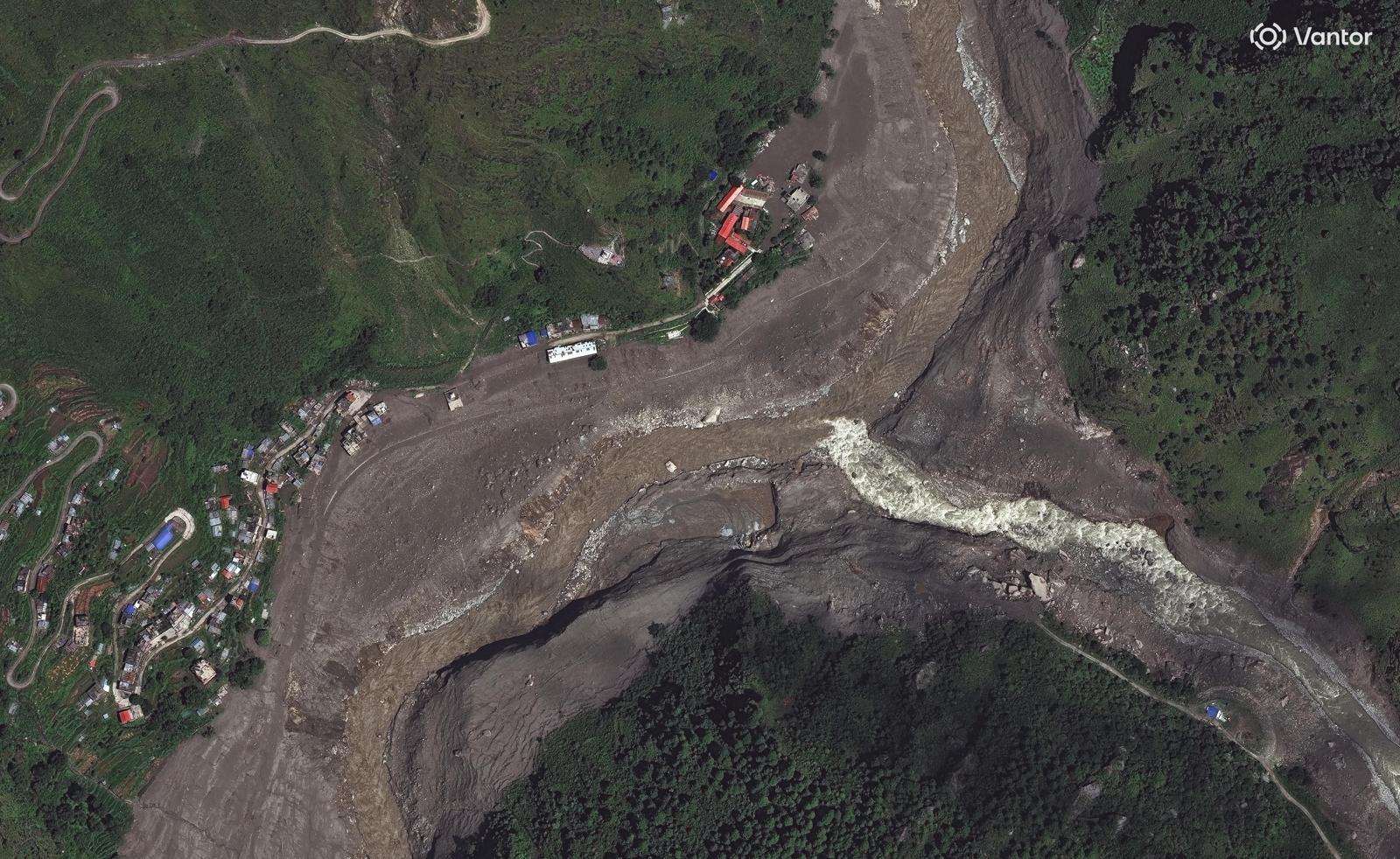
Satellite imagery has provided a stark visual record of the devastation wrought by the recent flash flood and landslides in Nepal, which occurred near the border with China's Tibet region. Analysis firm Planet Labs released comparative images showing landscapes before and after the disaster, highlighting the destructive power of the event.
The images capture areas along the Trishuli River, a mountainous village in the Rasuwa district, and the Kerung–Rasuwagadhi border crossing between China and Nepal. Before the flood, these areas showed infrastructure like bridges and clusters of buildings. After the disaster, the same locations are shown covered in mud and debris, underscoring the scale of the destruction.
The flood is believed to have been triggered on August 26th when a glacial mass approximately 600 meters wide collapsed into the Langtang Lirung mountain's river. The resulting debris dammed the river, causing water levels to rise and eventually inundate residential areas downstream. The formation of additional lakes due to the blockage has heightened fears of further flooding.
As casualty figures continue to rise, with hundreds reported dead and thousands missing, the satellite images offer a critical perspective on the extent of the damage. Rescue operations are ongoing, with security forces seen searching for survivors amidst the mud and wreckage. The images serve as a grim testament to the force of nature and the immediate aftermath faced by the affected communities.
About this summary
Originally published by Hankyoreh in Korean. Translated, summarized, and contextualized automatically by DistantNews, with a note on how the source frames the story. Not individually reviewed before publishing. How this works.
More Stories


From Our Blog

What Gets Lost (and Found) When News Is Translated

The Critical Role of Diaspora Media in Global News

What Travellers Should Know About Countries with Restricted Press

A Digital Nomad's Guide to Following Local News

How the Same Story Looks Different in Different Countries
