


Two 'glacial tsunami' lakes near Nepal-China border at risk of bursting
Translated from Korean and summarized by DistantNews. Read the original for the full story.
At a glance
News
Named sources
Ongoing story
- Two newly formed lakes on the Nepal-China border, created by rock and ice debris from a recent glacial collapse, are at risk of bursting.
- Authorities in both Nepal and China have warned that rising water levels in these natural dams could lead to secondary floods.
- The glacial collapse on August 26th has already caused significant casualties, with hundreds dead and over 1,400 missing in Nepal and China's Tibet region.
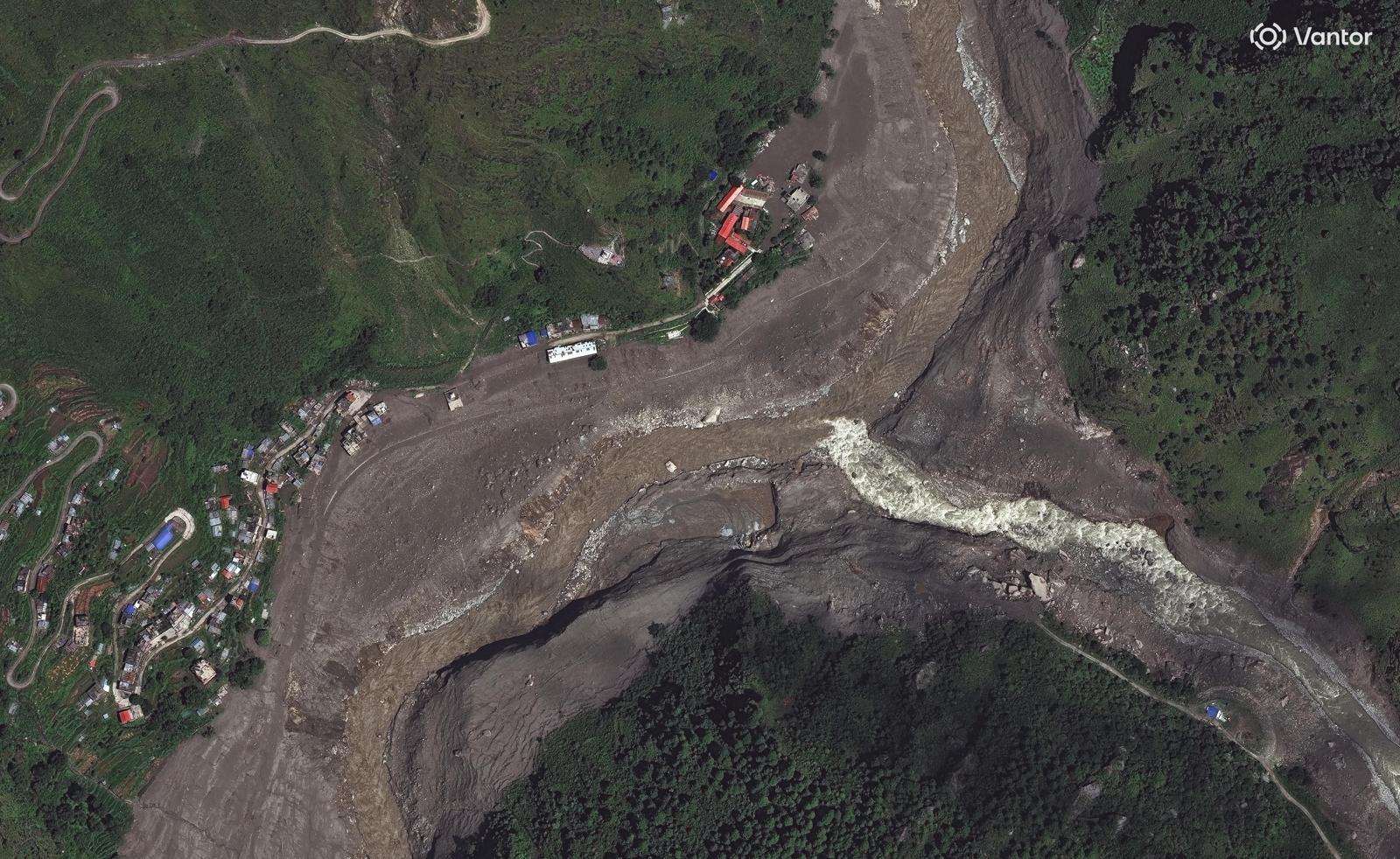
Concerns are mounting over the potential for secondary floods as two newly formed lakes on the Nepal-China border are at risk of bursting. These lakes were created by rock, soil, and ice debris that blocked a river following a massive glacial collapse on August 26.
Authorities in both Nepal and China have issued warnings about the rising water levels in these natural dams. The Nepal National Disaster Risk Reduction and Management Authority (NDRRMA) stated that the water level in the Nepalese lake is continuously rising, posing a risk of the dam bursting. Residents, travelers, and rescue workers in downstream areas of the Botekoshi River have been urged to exercise extreme caution and move to safe locations away from the riverbanks and hazardous areas.
The water level is continuously rising, and there is a risk that the lake could burst.
On the Chinese side, near the Tibet Autonomous Region's Gyirong County, water has already begun overflowing the natural dam. Chinese state media reported that an estimated 3 million cubic meters of water could flow into the lake over the next three days, increasing the risk of collapse. This volume is equivalent to about 1,200 Olympic-sized swimming pools. The current water volume is estimated at 2 million cubic meters, and water is already spilling over the natural embankment. The peak inflow is expected around September 1.
The recent glacial collapse has already resulted in at least 392 deaths and over 1,400 missing individuals in Nepal and China's Tibet region. As search and rescue operations continue, the fear of a secondary flood has prompted some Nepalese rescue teams to relocate from the riverbed to higher ground. Nepalese authorities are also restricting traffic on major highways and evacuating residents from vulnerable areas in response to the ongoing flood risk.
The amount of water flowing into the natural dam lake is expected to reach about 15 cubic meters per second.
About this summary
Originally published by Hankyoreh in Korean. Translated, summarized, and contextualized automatically by DistantNews, with a note on how the source frames the story. Not individually reviewed before publishing. How this works.
More Stories


From Our Blog

What Gets Lost (and Found) When News Is Translated

The Critical Role of Diaspora Media in Global News

What Travellers Should Know About Countries with Restricted Press

A Digital Nomad's Guide to Following Local News

How the Same Story Looks Different in Different Countries
