


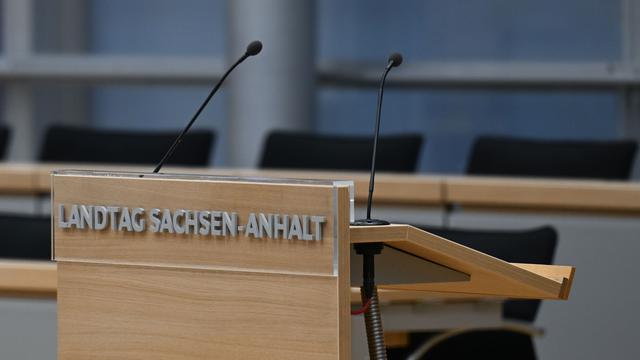

Saxony-Anhalt Election: No Party Is Safe in the State
Translated from German and summarized by DistantNews. Read the original for the full story.
At a glance
Analysis
Documents & data
Ongoing story
- Saxony-Anhalt’s state election could produce a new governing experiment, including the AfD’s first state government or a government formed around it by other parties.
- The state has previously hosted unusual governing arrangements, including an SPD minority government tolerated by the PDS from 1994 to 2002.
- Saxony-Anhalt also pioneered the first Kenia coalition in 2016 and the first Germany coalition afterward.
Whatever happens in Saxony-Anhalt’s state election on Sunday, the state could become a laboratory for a new form of government. The AfD might lead a government for the first time, either with an absolute majority or as a minority administration. Alternatively, the other parties could find a way to form a government without it.
Saxony-Anhalt has experience with political experiments. From 1994 to 2002, the SPD governed as a minority administration tolerated by the PDS, the successor party to the SED and predecessor of today’s Left party. Known as the Magdeburg Model, it lasted longer than any other minority government in German history.
The state has also been the testing ground for two coalition arrangements that were first tried nationally there. In 2016, it formed Germany’s first Kenia coalition, bringing together the SPD, Greens and CDU. It later produced the first Germany coalition, made up of the CDU, SPD and FDP.
A review of 36 years of election results looks at how parties in Saxony-Anhalt have risen quickly and then fallen just as quickly, and what that history could mean for the AfD.
About this summary
Originally published by Die Zeit in German. Translated, summarized, and contextualized automatically by DistantNews, with a note on how the source frames the story. Not individually reviewed before publishing. How this works.
More Stories


From Our Blog

News in Translation: What Gets Lost, and How We Keep the Framing

The Same Story, Different Countries: How Coverage Changes at the Border

Diaspora Media: How Communities Follow News From Home

Traveling Where the Press Is Not Free: How to Read the News There

The Digital Nomad's Guide to Local News
