


Scientists calculate Earth's biosphere could last another 1.8 billion years
Translated from English, summarized and contextualized by DistantNews.
At a glance
News
Sources not specified
Context piece
- Scientists used a 3D climate model to simulate Earth's climate over the next two billion years.
- They predict Earth's plant biosphere can exist for about 1.8 billion years before rising solar luminosity makes it uninhabitable.
- The study did not account for potential plant evolution or human technological advancements.
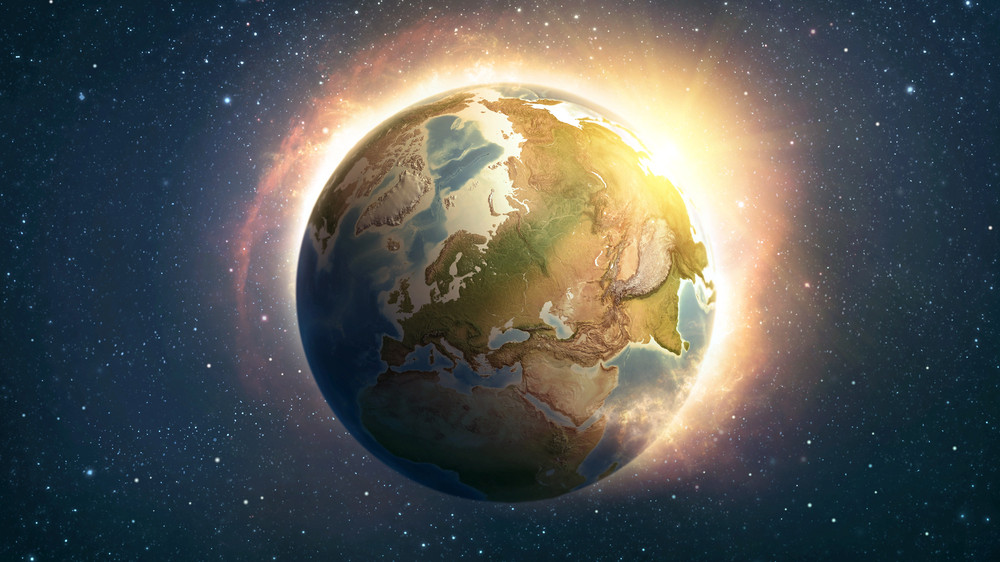
Earth's plant life may persist for another 1.8 billion years, according to a new study by scientists from the University of Colorado Boulder and Blue Marble Space. Utilizing a sophisticated three-dimensional climate model, researchers simulated the planet's climate evolution over the next two billion years, factoring in changes in temperature, cloud cover, precipitation, ocean states, and atmospheric circulation.
The study's authors project that as the Sun ages, its luminosity will gradually increase. This will lead to rising temperatures on Earth and a decline in carbon dioxide concentrations, essential for plant photosynthesis. Consequently, most vegetation is expected to perish, with only the most drought-resistant species, such as cacti, predicted to survive the longest.
Researchers examined two scenarios: one with a gradual decrease in carbon dioxide due to natural weathering, and another where carbon levels remain relatively constant, with rising temperatures being the primary driver of change. Both scenarios indicated that Earth's plant biosphere has a lifespan of approximately 1.8 billion years.
Following this period, Earth is expected to lose its oceans and become uninhabitable due to further increases in the Sun's luminosity. However, the scientists emphasized that their simulation did not incorporate the potential for plant evolution or future human technological advancements, both of which could alter the biosphere's lifespan. The possibility of plants adapting to new conditions or life migrating beyond Earth was not ruled out.
DistantNews Editorial
Originally published by Tengrinews in English. Translated, summarized, and contextualized by our editorial team with added local perspective. Read our editorial standards.
More Stories



From Our Blog

What Gets Lost (and Found) When News Is Translated

The Critical Role of Diaspora Media in Global News

What Travellers Should Know About Countries with Restricted Press

A Digital Nomad's Guide to Following Local News

How the Same Story Looks Different in Different Countries
