

Searching for Lost Soldiers: Vietnam and US Collaborate in Joint Recovery Mission
Translated from Vietnamese, summarized and contextualized by DistantNews.
TLDR
- Vietnamese and American teams are collaborating to search for the remains of U.S. soldiers missing since the Vietnam War.
- The operation involves meticulous excavation and sifting of soil in Quảng Trị province, following a systematic, step-by-step process.
- Local farmers are employed for the physically demanding tasks, earning a daily wage while contributing to the recovery effort.
In the heart of Quảng Trị province, amidst the lingering echoes of a past conflict, a meticulous and somber operation unfolds. Vietnamese and American personnel are working side-by-side, their shared purpose to locate and recover the remains of U.S. servicemen lost during the war. This collaborative effort, described as 'searching through every handful of soil,' embodies a profound commitment to closure and remembrance.
Searching through every handful of soil is not a figurative expression but a literal description of the work.
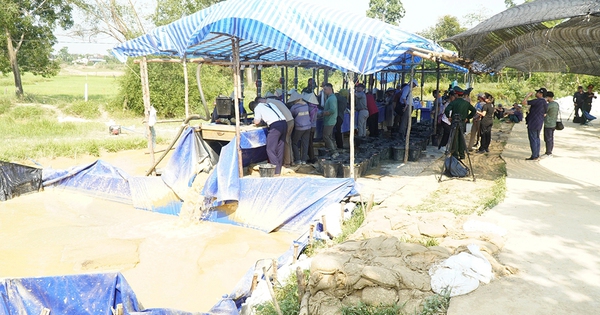
The scene at the excavation site in Long Đại village is one of organized diligence. A chain of approximately 70 individuals, both Vietnamese and American, meticulously work through layers of earth. Heavy machinery carefully removes soil, which is then passed along a human chain, sifted through metal chutes with running water, and finally, examined by hand. This painstaking process, repeated rigorously, aims to uncover any trace of the missing soldiers.
Everyone is human, and the war is long over.
Local farmers, primarily middle-aged women from the Long Đại community, play a crucial role in this operation. Earning a daily wage of 230,000 Vietnamese đồng, they participate in the physically demanding task of sifting the soil. While the income is a significant draw, especially during the agricultural season, there's an underlying sense of purpose and respect that permeates their work. As Bà Phan Thị Trưng, a participant, noted, they are trained to handle found objects with care, leaving the analysis to the experts.
Before starting work, we were given very thorough instructions. The work is mainly manual, so it's not too difficult. But we are not allowed to touch the things found; that is the experts' job.
This joint mission transcends the historical animosity of the past, focusing instead on a shared humanity. The dedication of both Vietnamese and American teams, coupled with the involvement of the local community, highlights a powerful narrative of reconciliation and the enduring quest for answers. For Vietnam, this is not just about recovering foreign remains; it's a testament to the nation's capacity for healing and its commitment to addressing the unresolved legacies of war, a perspective often overlooked in international coverage that may focus solely on the U.S. aspect of the recovery.
We are still in the middle of the farming season. But clearly, in the countryside, to be paid 230,000 dong/day, it's hard to refuse.
DistantNews Editorial
Originally published by Thanh Niên in Vietnamese. Translated, summarized, and contextualized by our editorial team with added local perspective. Read our editorial standards.
More Stories
From Our Blog

What Gets Lost (and Found) When News Is Translated

The Critical Role of Diaspora Media in Global News

What Travellers Should Know About Countries with Restricted Press

A Digital Nomad's Guide to Following Local News

How the Same Story Looks Different in Different Countries
