

Serbian President Vučić Criticizes Hague's Handling of Ratko Mladić's Death
Translated from Croatian and summarized by DistantNews. Read the original for the full story.
At a glance
News
Sources not specified
Outcome reported
- Serbian President Aleksandar Vučić criticized the Hague tribunal's actions surrounding the death of war criminal Ratko Mladić.
- Vučić claimed the tribunal wanted Mladić to die in prison and prevented him from dying in Serbia.
- He also commented on the expected sentencing of Hashim Thaçi and the acquittal of individuals accused of crimes against Serbs.
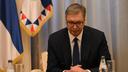
Serbian President Aleksandar Vučić has strongly criticized the International Criminal Tribunal for the former Yugoslavia (ICTY) regarding the circumstances of war criminal Ratko Mladić's death. Vučić asserted that the tribunal's actions demonstrated an "anti-civilization" approach, as they allegedly wished for Mladić to die while imprisoned rather than in Serbia, where he had desired to pass away.
"They did not want to allow the general to die in Serbia, to die where he wanted," Vučić stated, describing the tribunal's alleged stance as unprecedented and unjustifiable. He mentioned that teams were sent to The Hague to assist with logistical matters, but he could not provide further details as no official information had been received from the tribunal.
In related comments, Vučić discussed the impending sentencing of Hashim Thaçi. Based on his information, Vučić predicted that Thaçi would be convicted of lesser offenses, with a sentence equivalent to the time he has already spent in pre-trial detention. This prediction comes amidst ongoing legal proceedings at The Hague.
Furthermore, Vučić expressed frustration over what he perceives as a pattern of acquittals for individuals accused of crimes against Serbs. He cited examples such as the acquittal of those involved in the "Oluja" (Storm) operation, including Ante Gotovina, and the release of Naser Orić, despite alleged testimony of his involvement in murder. Vučić suggested this pattern indicates a bias in the tribunal's judgments concerning crimes committed against Serbian victims.
About this summary
Originally published by Večernji List in Croatian. Translated, summarized, and contextualized automatically by DistantNews, with a note on how the source frames the story. Not individually reviewed before publishing. How this works.
More Stories



From Our Blog

What Gets Lost (and Found) When News Is Translated

The Critical Role of Diaspora Media in Global News

What Travellers Should Know About Countries with Restricted Press

A Digital Nomad's Guide to Following Local News

How the Same Story Looks Different in Different Countries
