


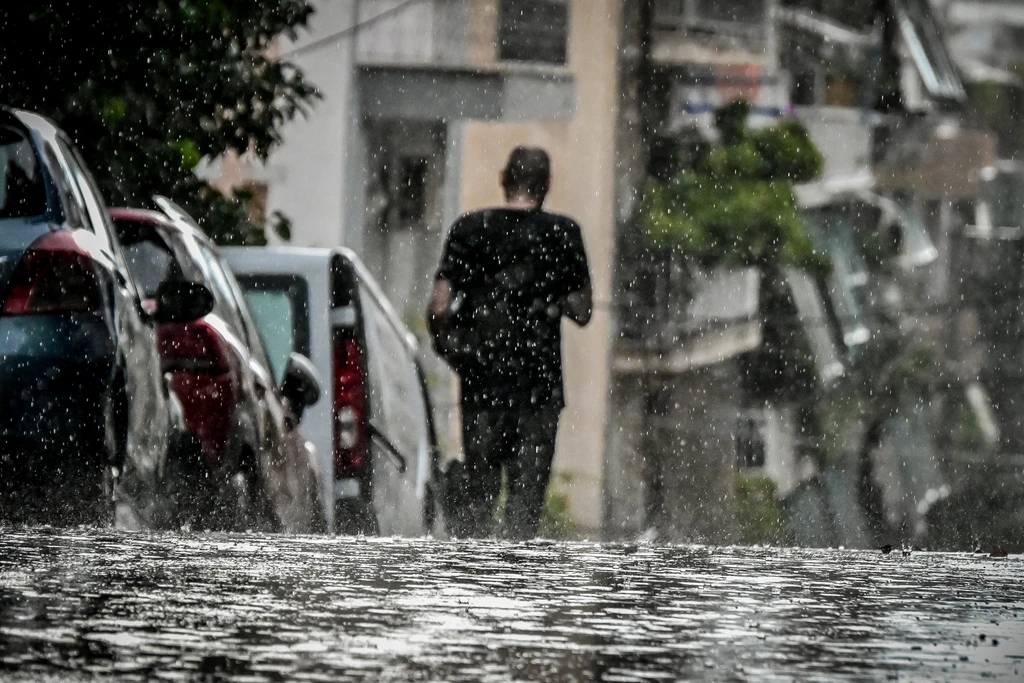
Severe weather persists in Greece with storms, lightning, and hail
Translated from Greek, summarized and contextualized by DistantNews.
At a glance
News
Official statement
Context piece
- Greece is experiencing persistent severe weather, including storms, lightning, and hail.
- The National Meteorological Service has issued warnings, with some areas on "red alert."
- The bad weather is expected to continue until Saturday morning in specific regions like the Sporades and Evia.
Greece is grappling with persistent severe weather, as heavy rains, thunderstorms, and lightning continue to affect numerous regions. The National Meteorological Service (EMY) has issued an urgent bulletin highlighting the ongoing adverse conditions, with some areas placed on a "red alert."
Following a difficult Friday afternoon for Attica, the focus of the rainfall and thunderstorms has shifted. As of Saturday morning, intense phenomena are concentrated in the Sporades, Evia, Magnesia, and the islands of the northeastern Aegean. The EMY has updated its extraordinary bulletin, emphasizing that the bad weather is forecast to last until Saturday morning, with the Sporades and Evia facing the highest level of warning.
Residents in the affected areas can expect strong rainfall and thunderstorms, accompanied by localized gale-force winds, frequent lightning, and a possibility of hail. Specifically, the Sporades and Evia are expected to experience these conditions until the early morning hours. Similar, though slightly less intense, weather is forecast for the northeastern Aegean islands (Limnos, Thasos, Samothrace) and the eastern coastal areas of Magnesia until the early morning.
While the rest of the country is expected to have generally clear skies with some cloud cover in the afternoons, the eastern mainland and the Aegean will see local rain and thunderstorms persist until the afternoon. North winds will range from 4 to 6 Beaufort, reaching up to 7 in the Aegean, and temperatures will see a slight drop, with most areas reaching 28-29 degrees Celsius, and up to 30 degrees Celsius in some inland areas, Crete, and the Dodecanese.
DistantNews Editorial
Originally published by Ta Nea in Greek. Translated, summarized, and contextualized by our editorial team with added local perspective. Read our editorial standards.
More Stories

From Our Blog

What Gets Lost (and Found) When News Is Translated

The Critical Role of Diaspora Media in Global News

What Travellers Should Know About Countries with Restricted Press

A Digital Nomad's Guide to Following Local News

How the Same Story Looks Different in Different Countries
